
The focus of several of my local "birding" friends is to see as many different species of birds as they can and basically add a tick for each new one seen, this is known as "twitching" and some of the most respected and knowledgeable birders I know would fit in to that category. Year lists are maintained and now that we are in to a new year I knew that they would be out and about starting their 2010 lists. I note that Dave Stone has already seen several "specials" that I would be excited to see and having looked at his diary here, I really must get out and about a bit more. I really ought to go and get photos of the Bewicks and Whooper Swans on the River Axe for example. Anyway, my garden has been very interesting this last few days and I have been persistently trying to get even better shots of the Redwing that is attracted to feed on the garden cotoneaster.
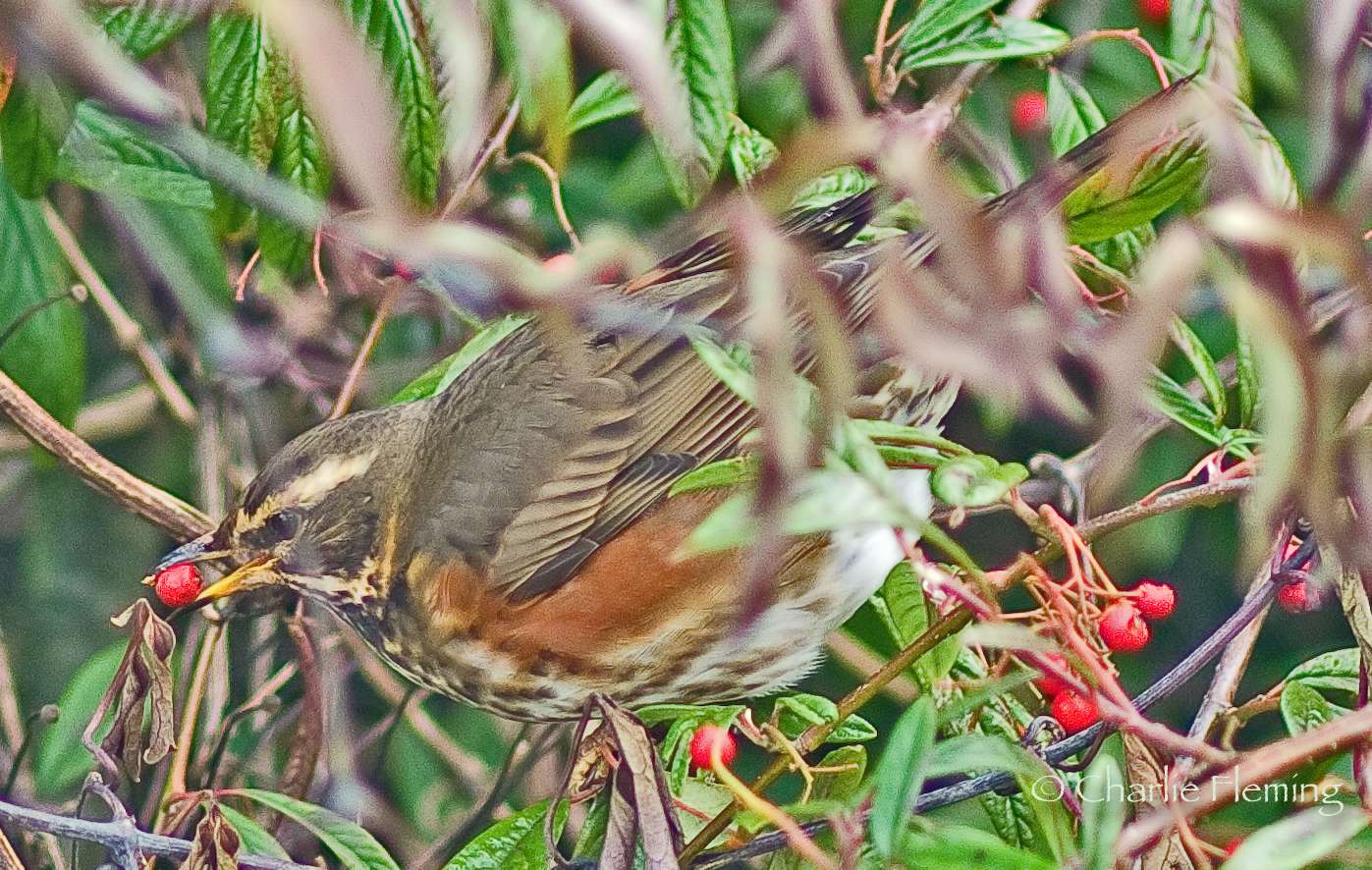
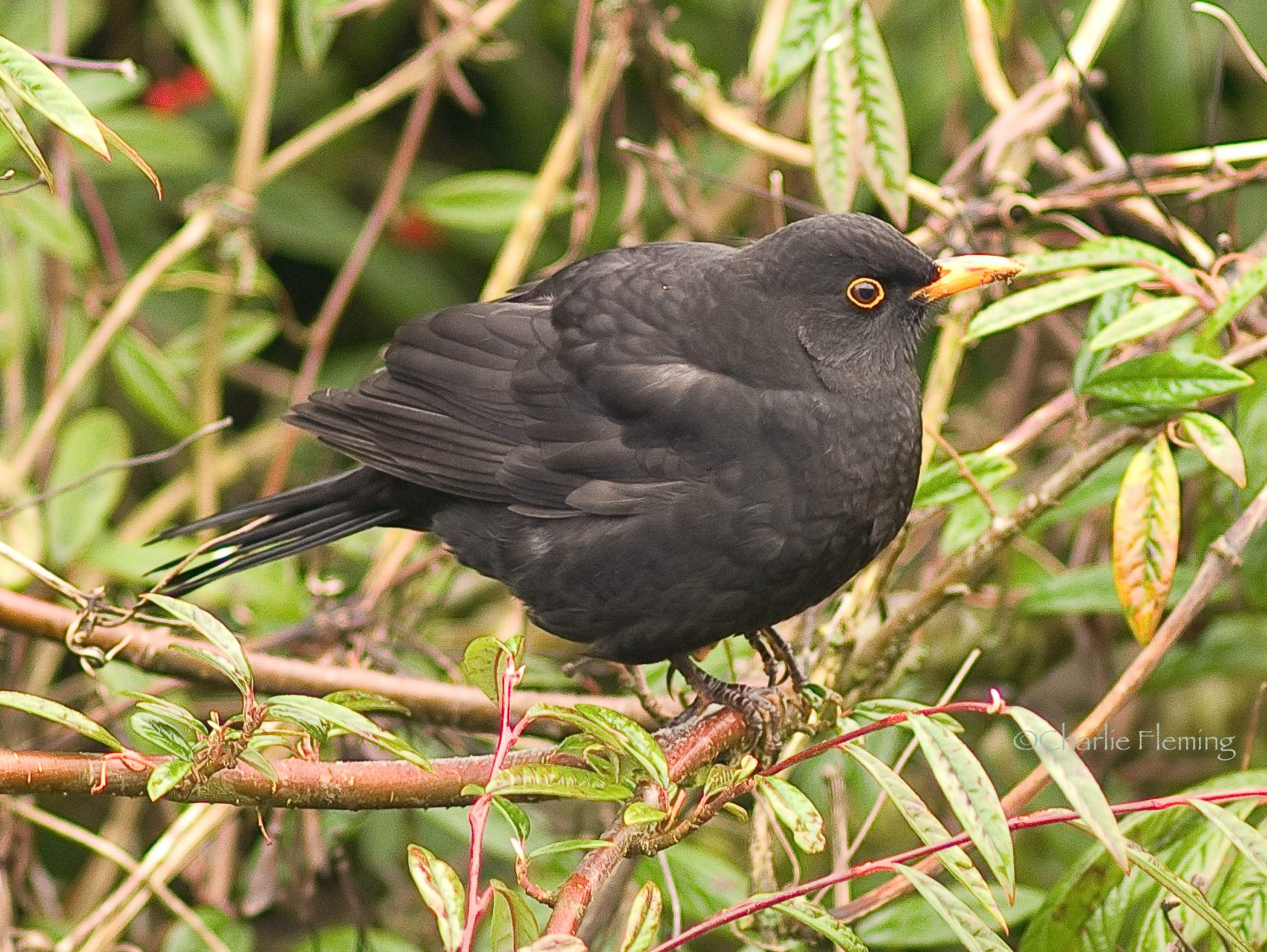
As you can see from today's shot, he is still coming to feed in spite of the harassment from the resident pair of Blackbirds. Redwings are not dimorphic, that is males and females are alike and there is also a fair amount of variation in their plumage. But, I am guessing that this bird is a male as it has very red flanks and is strongly marked. The feeding Redwing is more wary of the Blackbird than he is of me and it doesn't take long before he arrives to chase him away.
I was at home watching a bit of Football and, in between keeping a watch for Redwing activity and Blackcaps, they have been very wary this winter for some reason. I was very pleased when I received an email from a friend who lives nearby but in a more rural position. He told me that he was inundated with Bramblings! To be honest, I was doubtful that he was seeing Bramblings but I thought I ought to go and have a look. I arrived at the spot that he had mentioned and was immediately aware of a massive flock of finches and as I scanned them I was pretty sure that they were all Chaffinches. I was wrong, amongst them was quite a fair amount of Bramblings
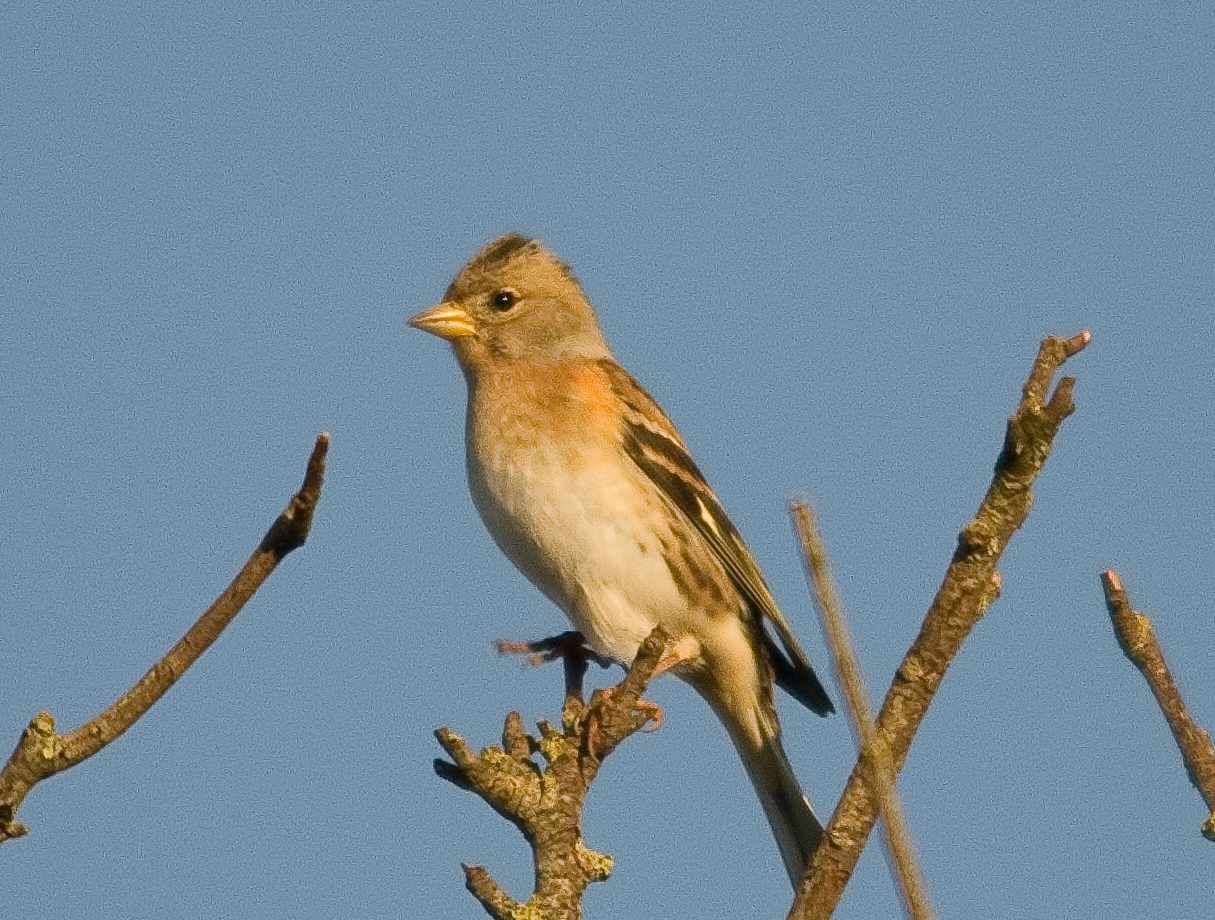
I took several photos of what I thought were Chaffinches and it wasn't until I had a look on the camera's review that I realised that amongst them were so many Bramblings. These are very interesting birds that arrive in the UK, also from Scandinavia every winter. Their numbers vary depending on the weather and availability of food in Europe. The ones that I saw today were feeding with the Chaffinches on stubble fields left by farmers. I believe that the fields are deliberately left like this as part of the Cirl Bunting project. Landowners are paid to set aside fields in the winter to try to encourage the Buntings to re-colonise areas here in Devon where they were formally, commonly seen.
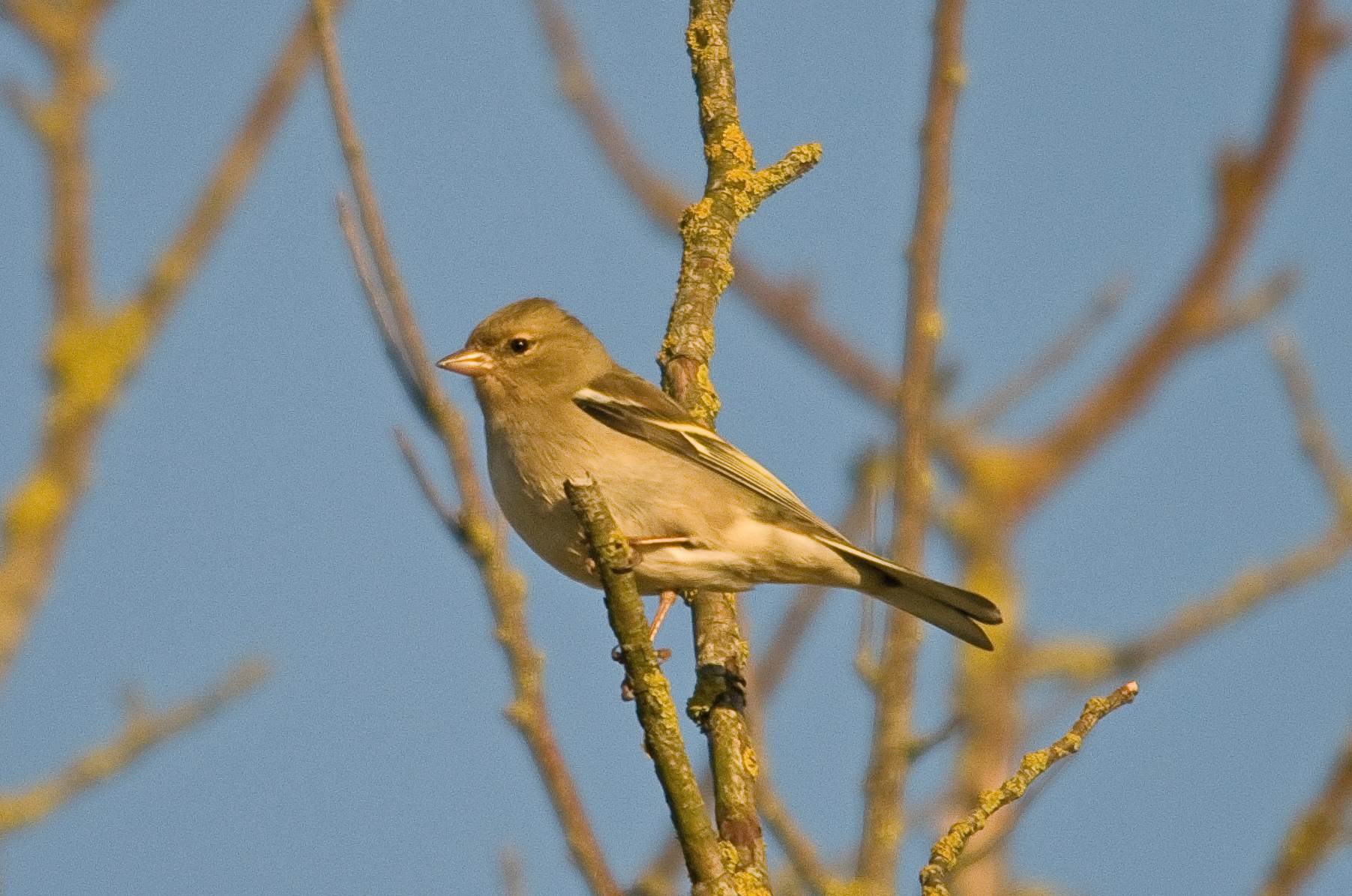
Here is a photo of a female Chaffinch – Fringilla coelebs to show how you could easily overlook the odd Brambling amongst the Chaffinch flocks.
I would think it quite unlikely that we would get Branblings in the garden but not absolutely out of the question. We do have Chaffinches almost daily and it is possible that they could be accompanied by Bramblings from time to time. Fingers crossed as they are for Siskins, Waxwings and Redpolls!
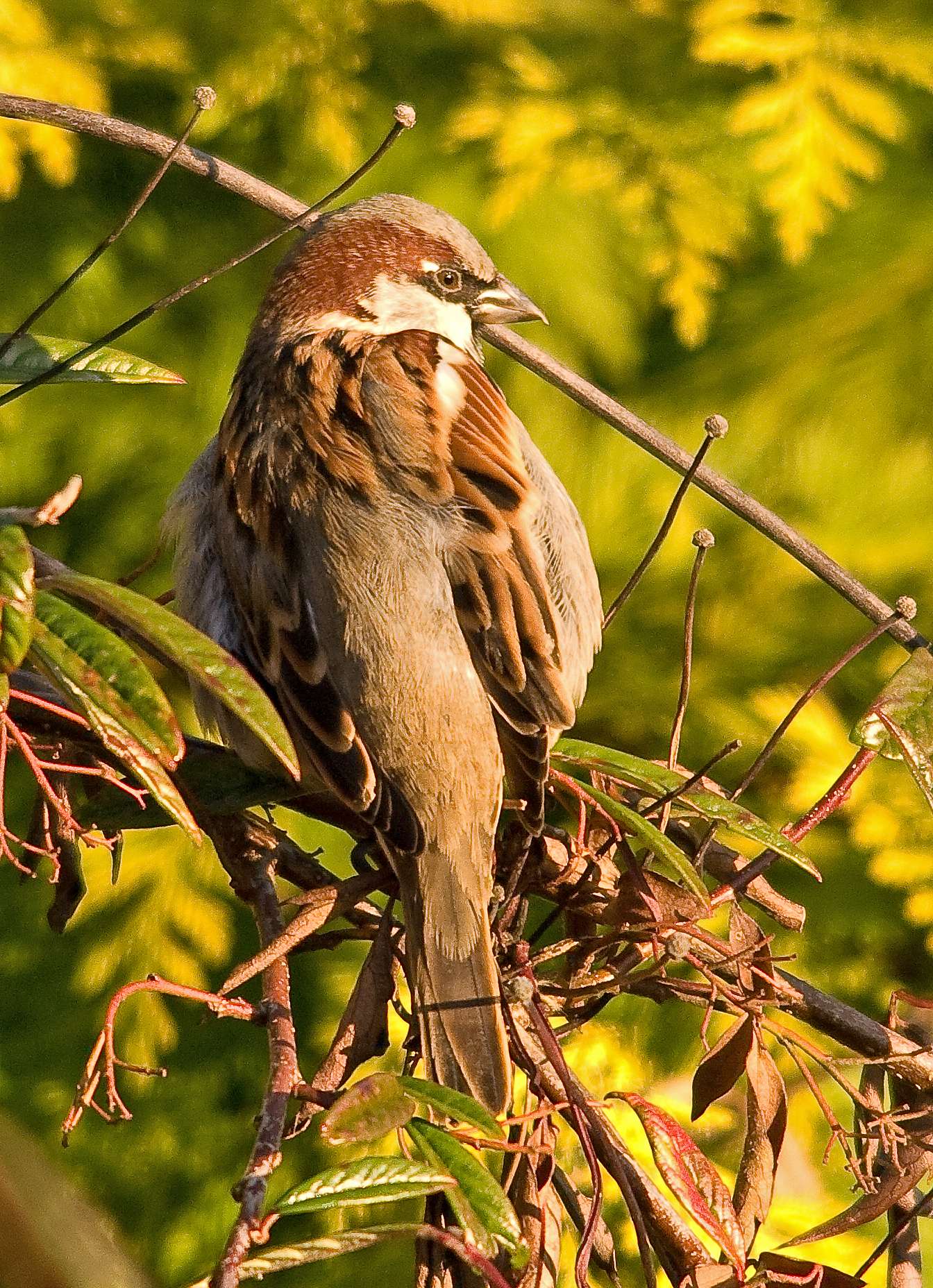
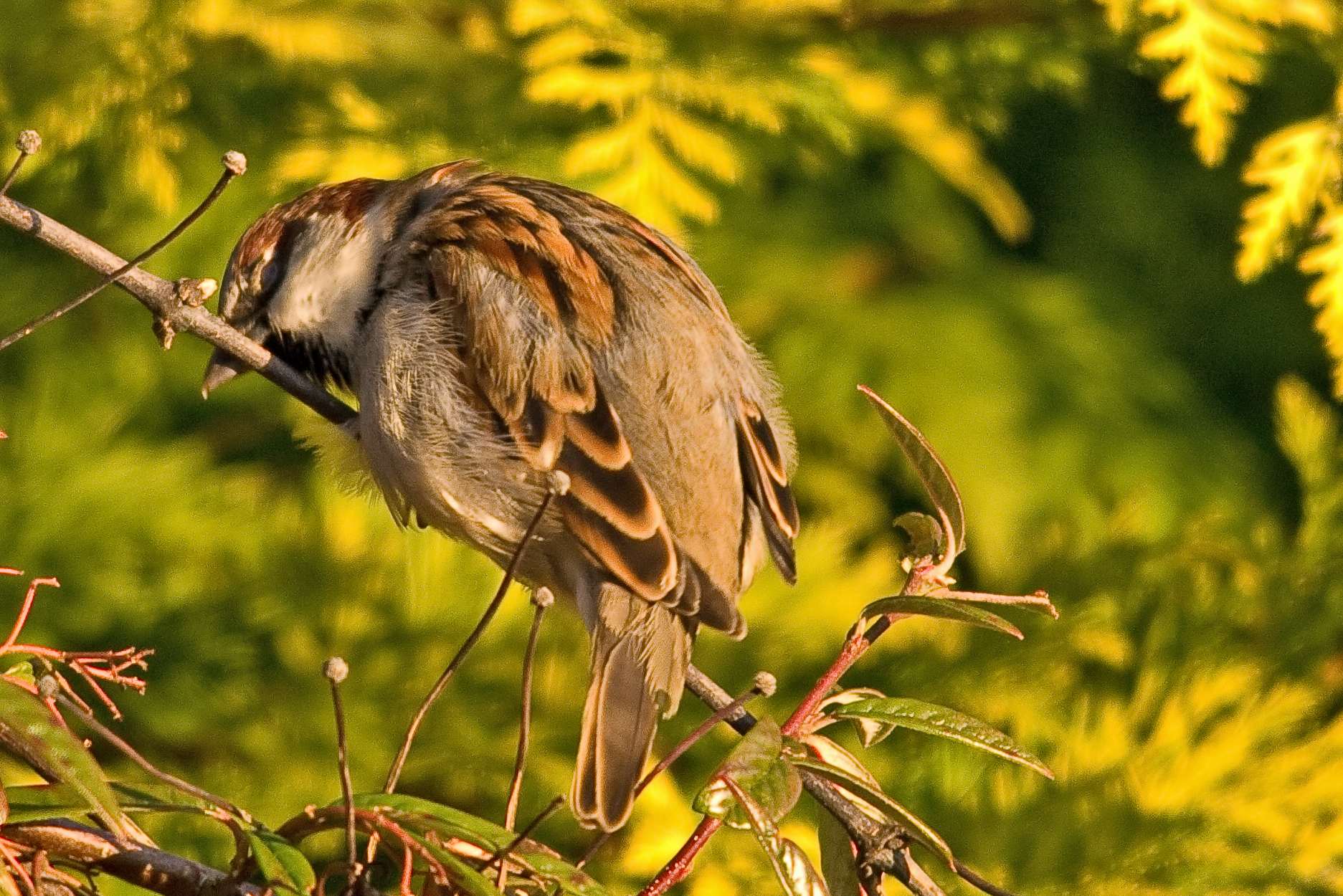
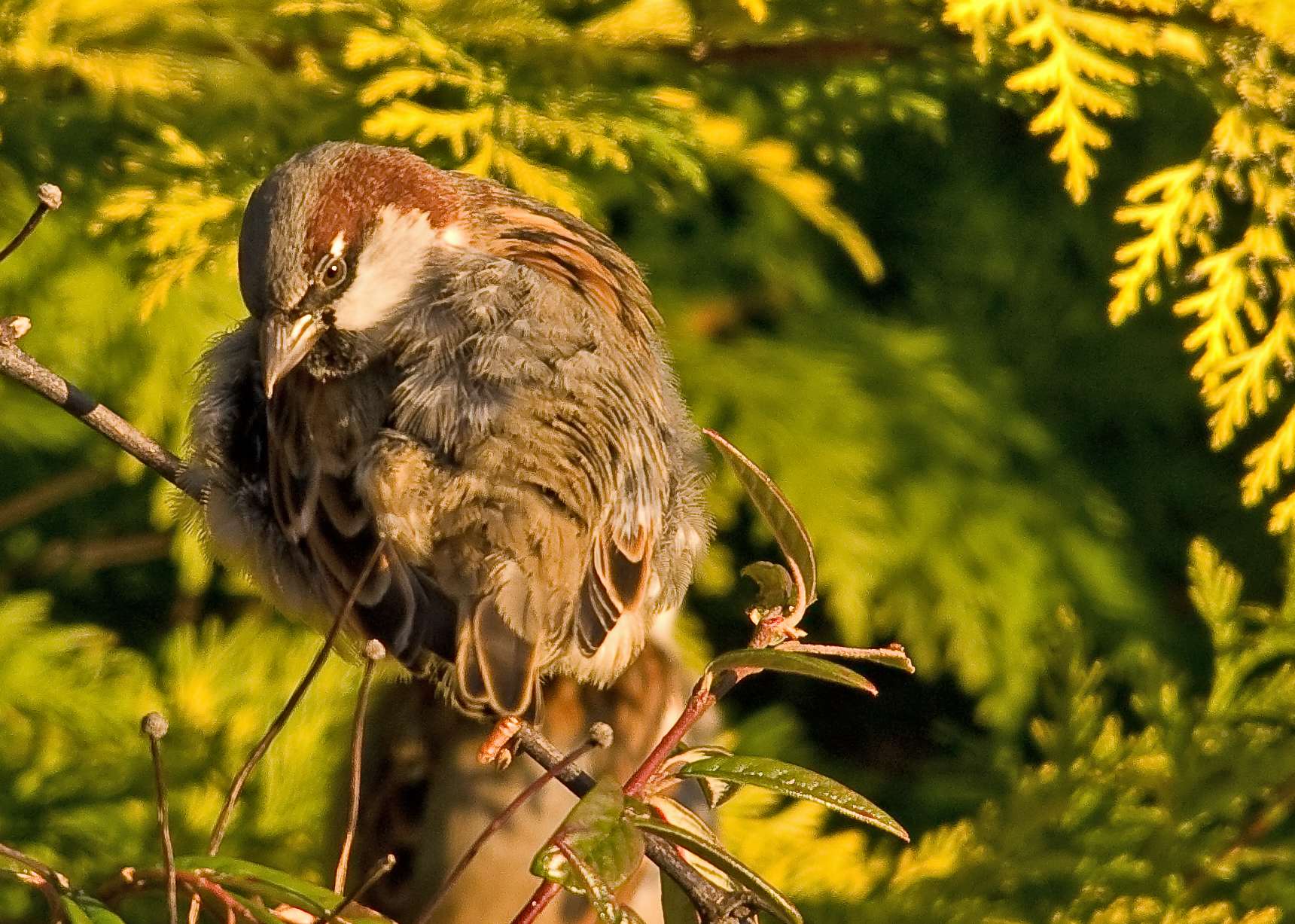
This morning, earlier on, the sun was quite bright and as I have been trying to learn more and more about House Sparrows – Passer domesticus, I am always keen to get some photos of this species in the garden. They have declined by 90% over the last two decades in some parts of the country. There is no conclusive proof about the reasons for decline but it is a worrying trend that is reflected all over Europe. House Sparrows mate fore life. They live in small colonies and there is always a dominant "alpha male" in each colony. He can be recognised by his 'badge", that is, his bib which is larger in the dominant bird. In our small colony, there are three males and you can easily recognise the "boss". This fellow (pictured) is one of the subordinate males. The young, when in the nest, are fed entirely on insects and this could be one reason for the decline in numbers? I would like to think that we have them in my garden because I use NO PESTICIDES or INSECTICIDES ever and haven't for the 25 years that we have lived here. Lots of insects and spiders are resident, could we be breaking the trend? House Sparrows have always been taken for granted but I am glad to say that this is no longer the case. For example, out of the few hundred birds that I have handled as part of my BTO ringing training we have not captured and therefore not ringed one. If I can find the nests of this small colony in the spring then I will be looking to get them ringed in an effort to keep track of them over the next few years.
There is so much to fit in and tomorrow I am going to Turf, on the Exe Estuary again to try for some better Avocet photos.
 Wildlife in a Suburban Garden
Leave a comment