
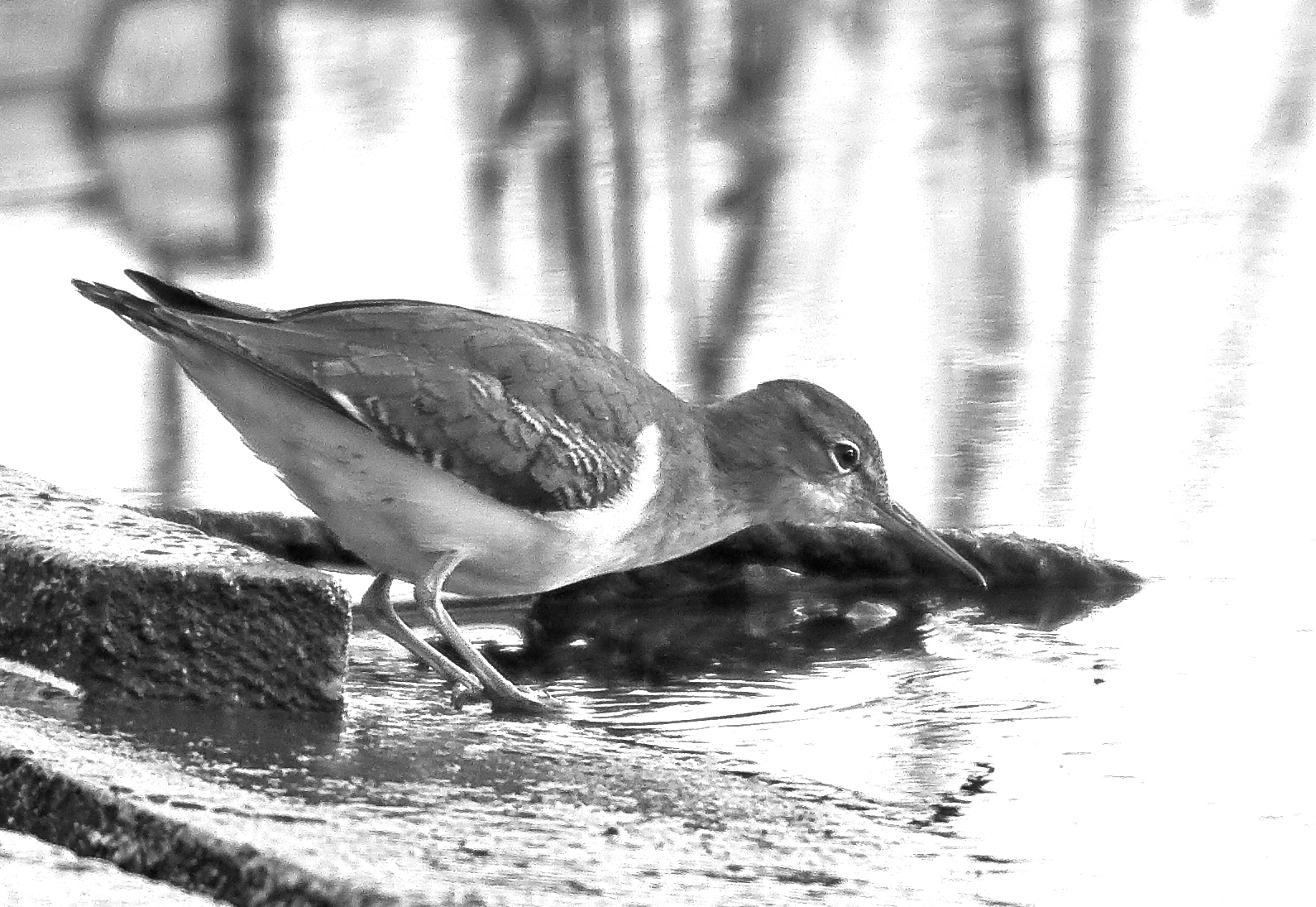
I thought I would do something different with this image. Whilst experimenting in Photoshop, I discovered that by converting to Black and White, this image had a nice impact. It has been really hard because of the poor light and direction of the sun, to get good shots of the very accommodating Spotted Sandpiper at Topsham. As it is so close to home and one of the rarest birds currently here in the UK, then I would not be doing myself justice if I didn't try, and then try again, to get the very best shots possible. I have improved from the other day so I am quite pleased, but there is so much more that could be achieved. It's perhaps worth mentioning if you are not familiar with Spotted Sandpiper that this is a very dainty little bird. it has been in the company of Pied Wagtails, a bird that I am sure we are all familiar with, and it is not really all that much bigger than that species. look for the Yellow legs and a hint of pink on the beak. In this sate of plumage there is also a hint of barred markings on the wing coverts. In flight it shows a noticeable wing bar. This bird is extremely easy to approach but the best course of action is to just stand still on the path in the middle of it's territory and eventually it will, sooner or later, be right in front of you as it feeds. It appears to spend most of it's time in the pursuit of food which it is obviously getting enough of or it would have moved on by now. It would be wrong to be constantly 'hounding' it as it is imperative that the bird finds food without frequent disturbance from what is obviously a massively important activity for a small bird in the middle of winter when days are short and nights are long and cold.
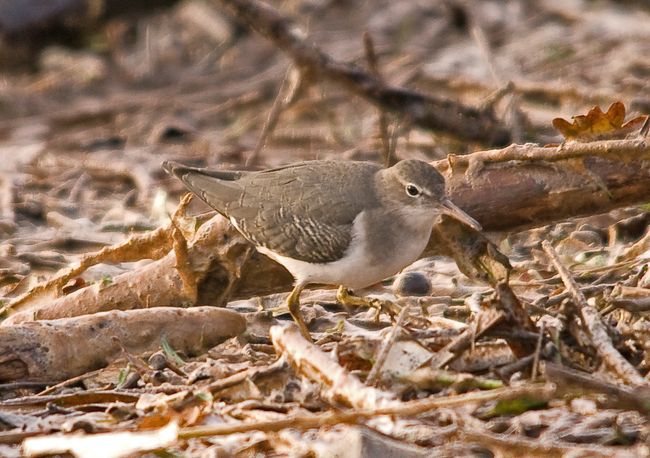
Tomorrow, the weather is set to be bright and clear as soon as the day dawns so I am planning a trip at first light when the sun will be from another direction and this may do the trick.
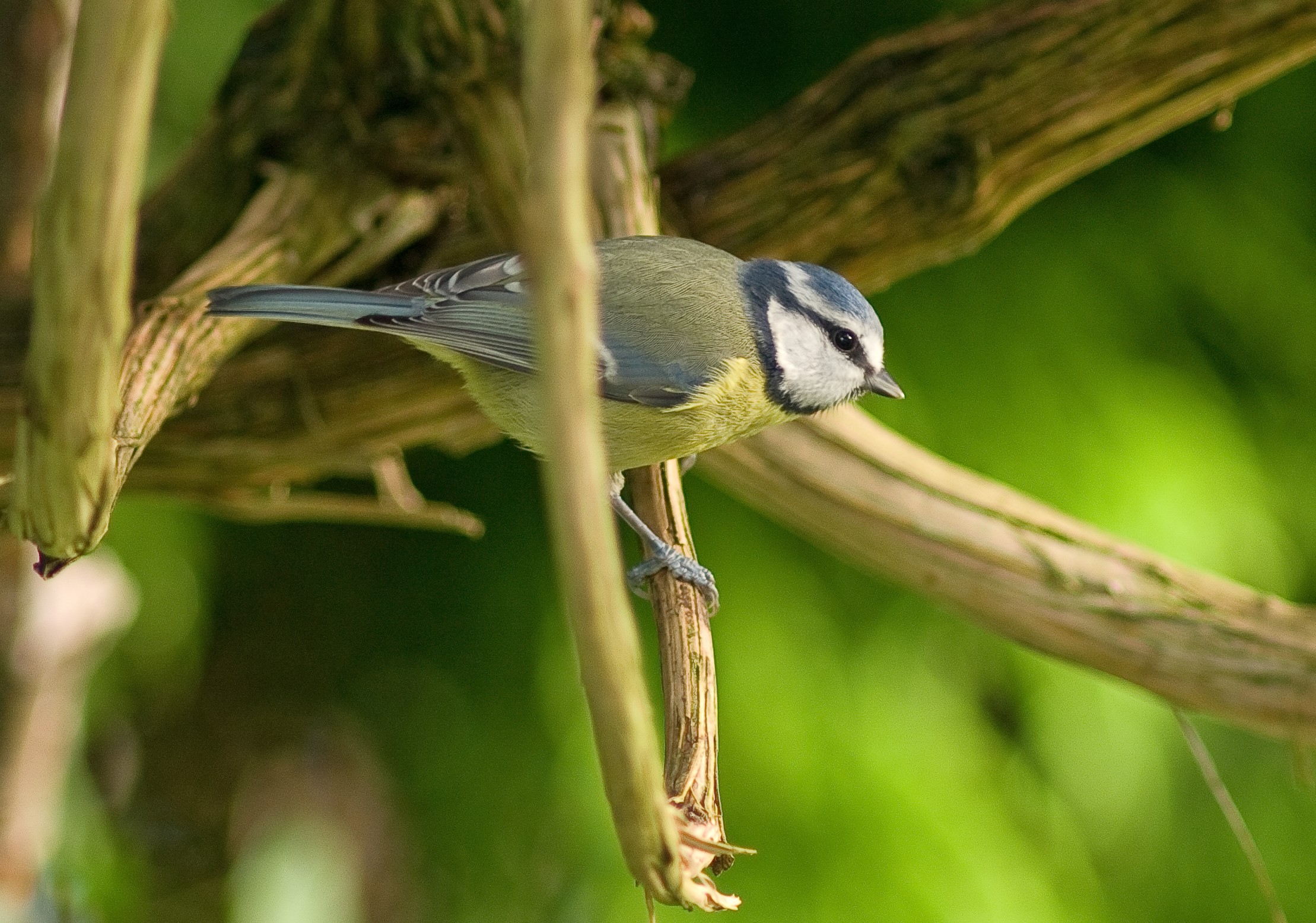
Before I went out in the early afternoon I spent a bit of time in the garden taking shots of everything that came within range. I was really waiting for the Blackcap to show, it was around because I had caught glimpses of it. When it does show I will be ready and waiting. I used the camo cover from my chair hide. I literally stood with it draped over me and with the lens protruding. All the usual garden birds put in a show and were not in the least bit phased by the strange shape very close to them. The best has to be this Blut Tit.
.
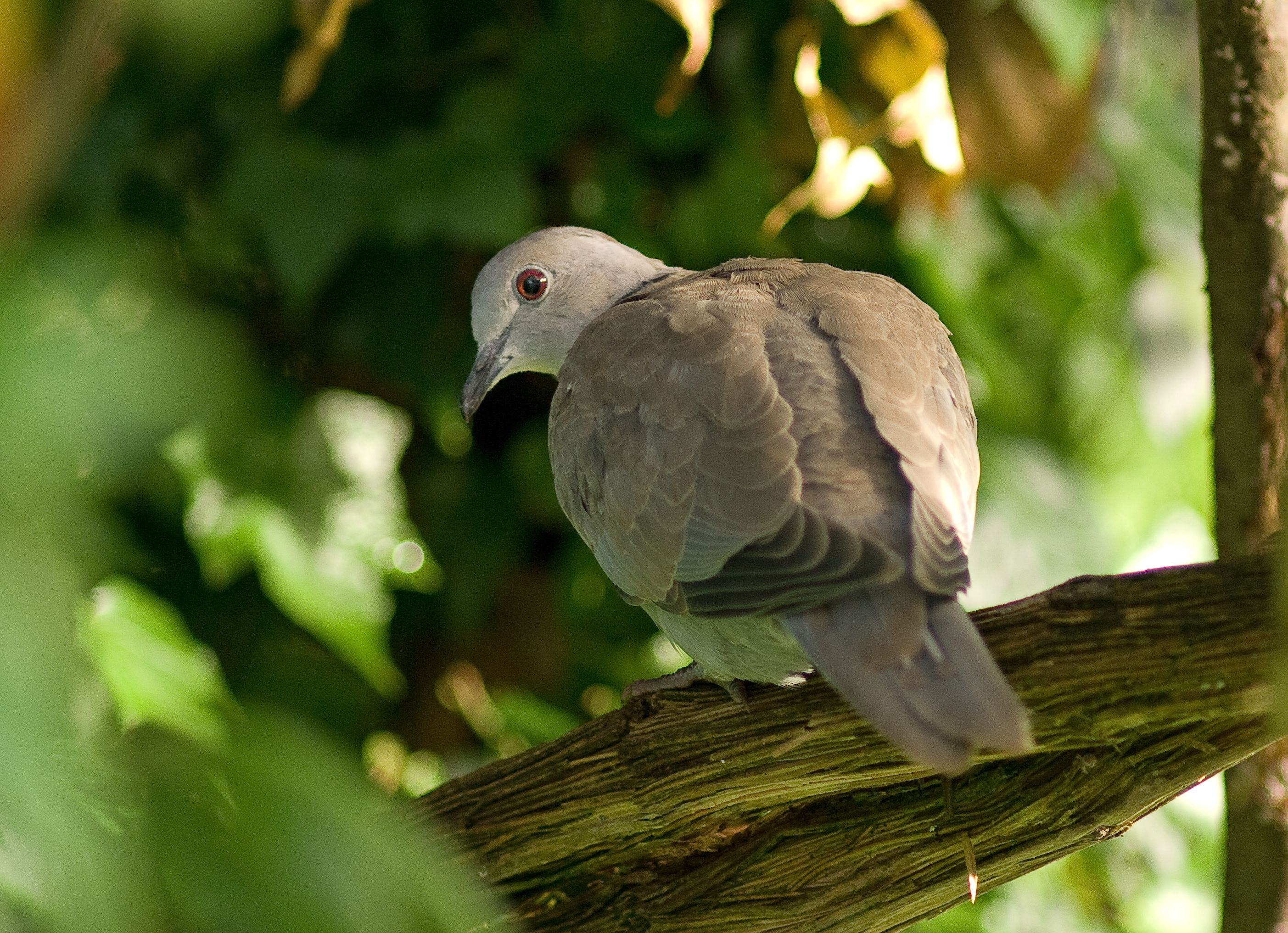
I didn't think I would be able to better my Collared Dove photos taken over the last couple of years but they are getting better and better and the brightly lit background and bright red eye make this one a bit out of the ordinary.
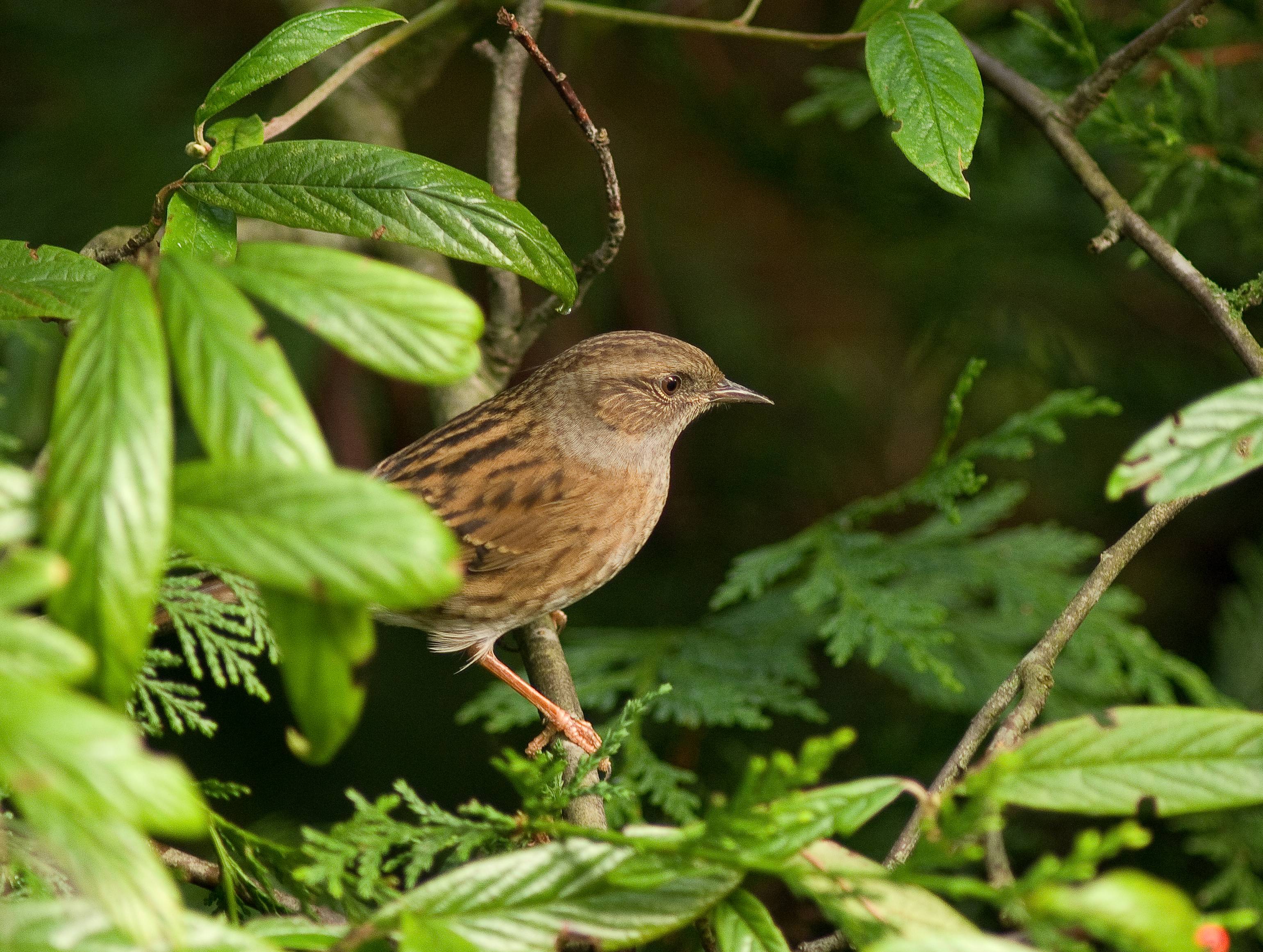
Dunnocks are also a garden constant and this one seemed to be asking for his photo to be taken, another species with a stunning eye. The latin name is Prunella modularis as I have said before. They are very flirty and the males will have several females on the go at once. Today this one was chasing a female all day long, from time to time stopping to feed and sing as well.
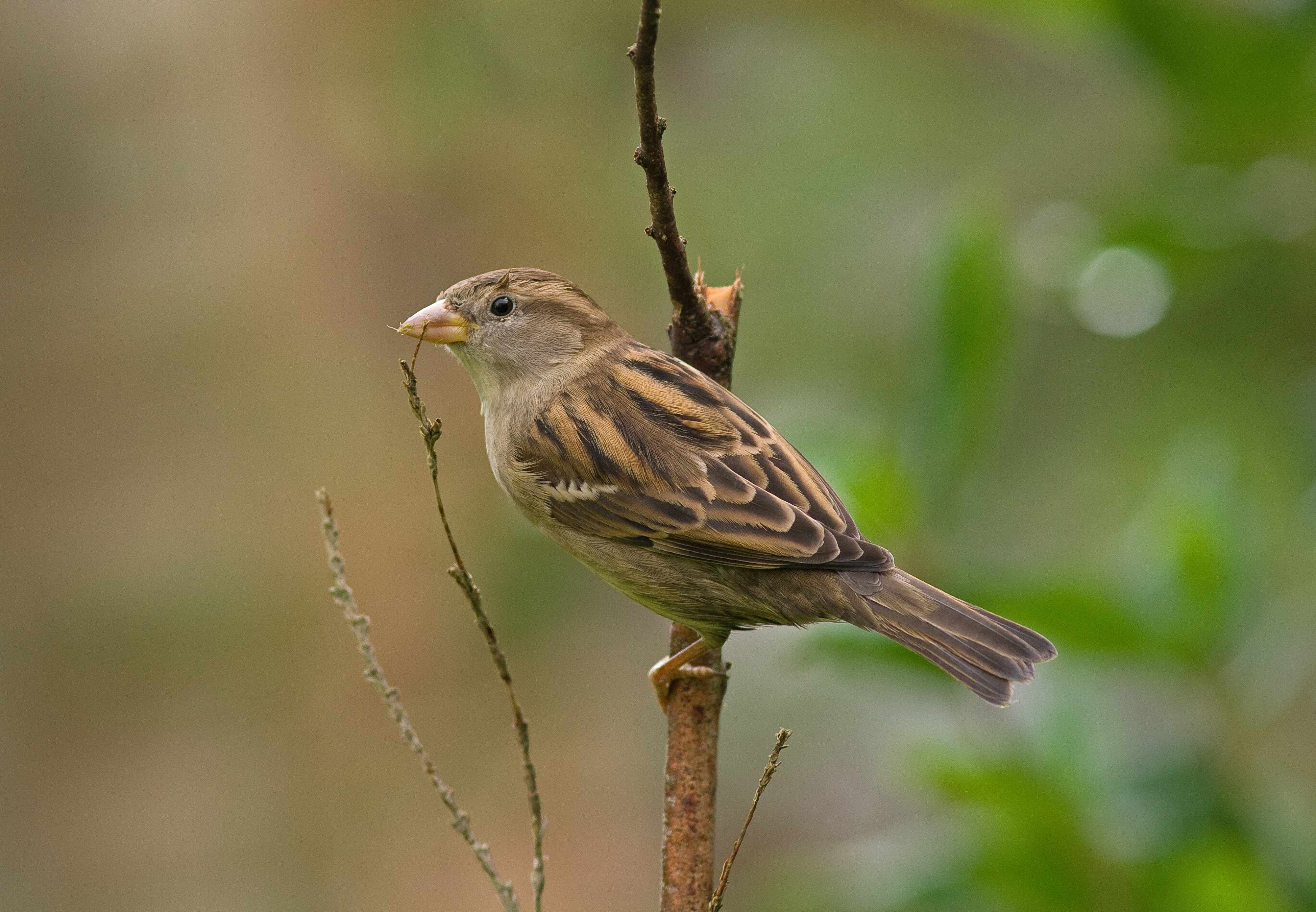
I had been a little worried that my kit wasn't working properly this last few days, it had seemed ages since I got a photo that I was really pleased with. I am therfore chuffed that I managed to get such a smashing picture of this female House Sparrow. I think that this picture is as good as it gets and if it was an exotic rare and colourful bird it would be a prize winner!
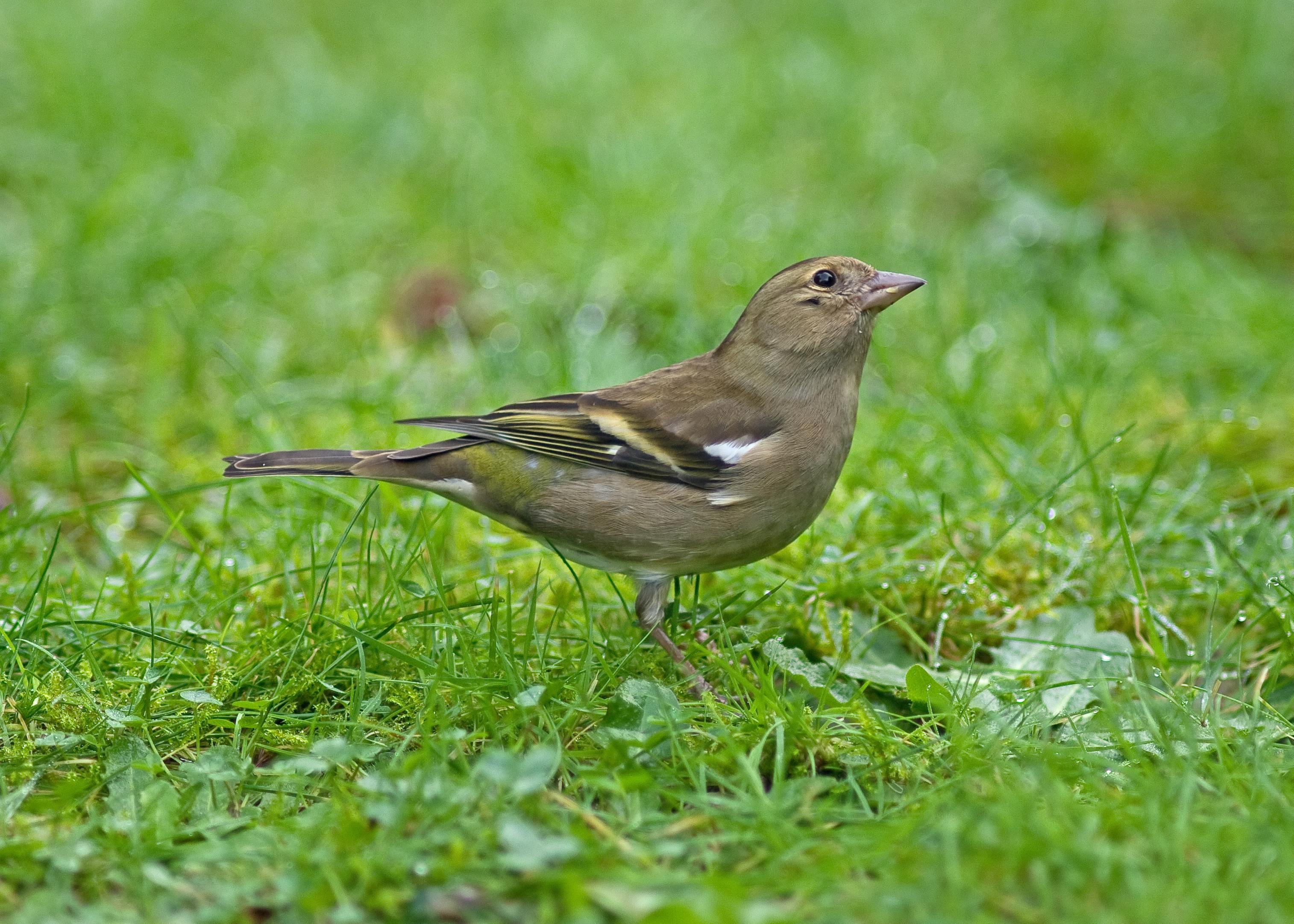
A Coal Tit graced the garden with it's presence today, the first for at least 2 months. This is in complete contrast to last year when they were pretty much the most common birds on the feeders. I am wondering if they faired badly this year as a breeding bird, or are we going to get them as the winter deepens? Another bird that is a usual in the garden but so far this year we have hardly had them is the Chaffinch. Well today we had a couple on the lawn, both females which is not unusual as in the wintertime they are known to move around in same sex flocks.
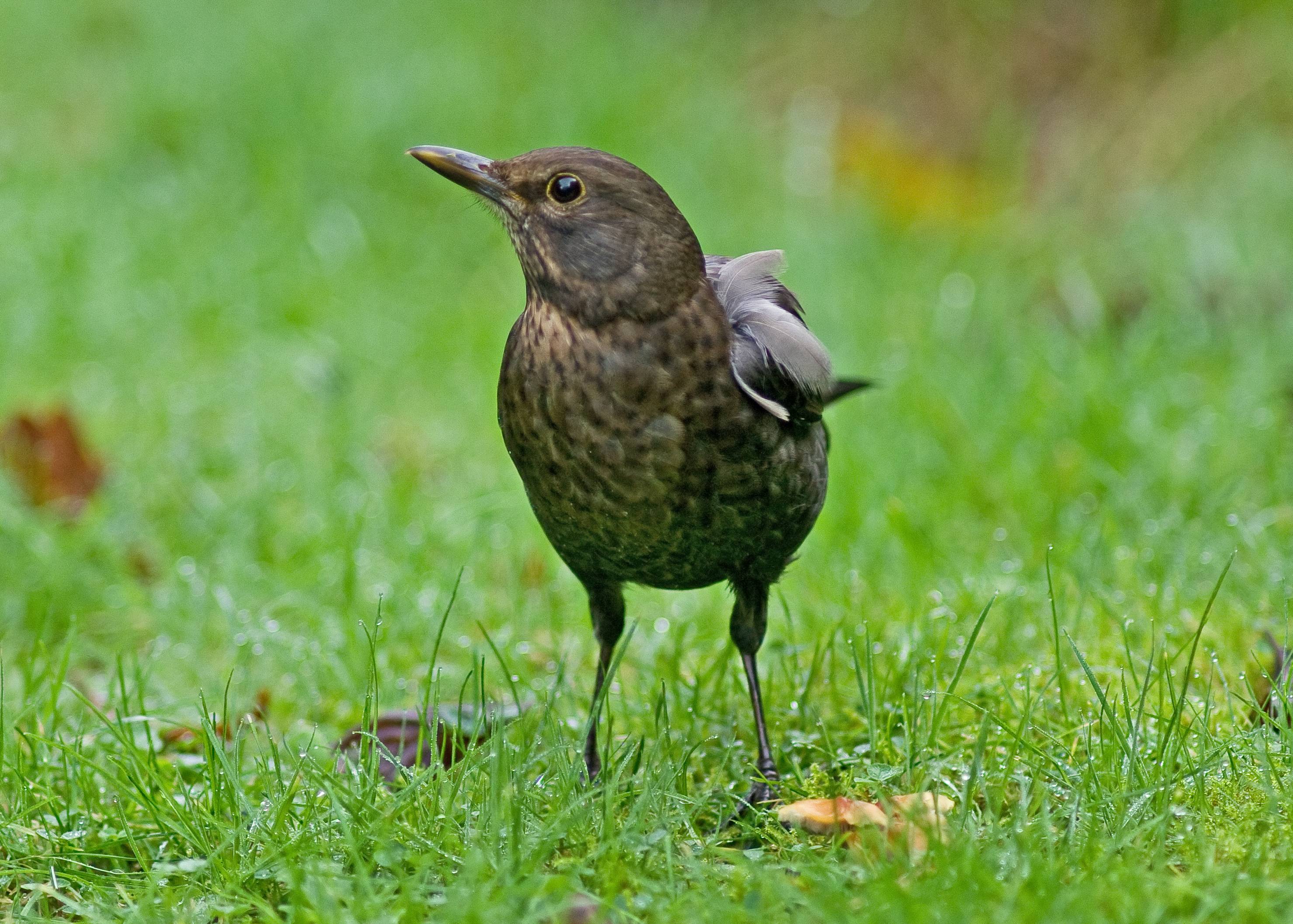
In the summertime a hen Blackbird was attacked by a Sparrowhawk in the garden, there was a pile of feathers some with skin attached. Then a few days later I saw a pretty beaten-up bird with a very nasty injury on the beak area and the back. Eventually she seemed to recover and I saw her from time to time with her damaged back giving her feathers a unique ruffled appearance. I am glad to say that she is doing fine and still around, and today she was on the lawn feeding on spilled sunflower seeds.


 Wildlife in a Suburban Garden
Leave a comment