
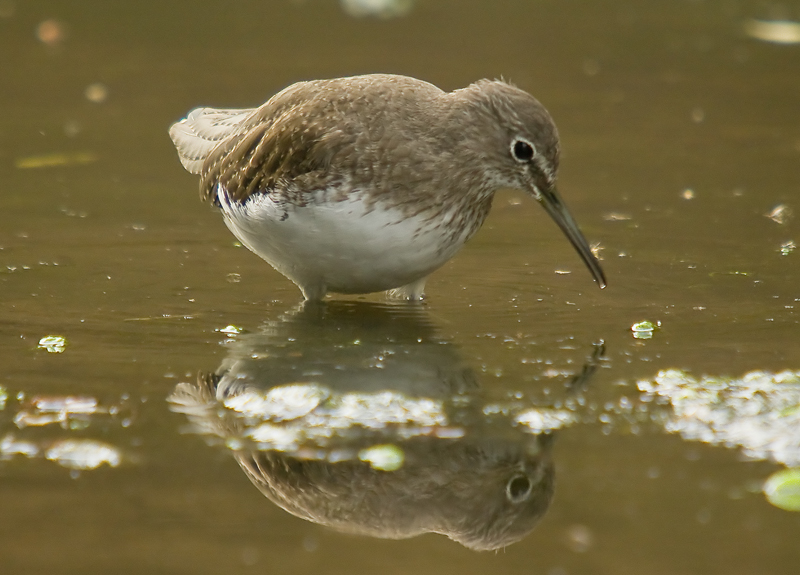
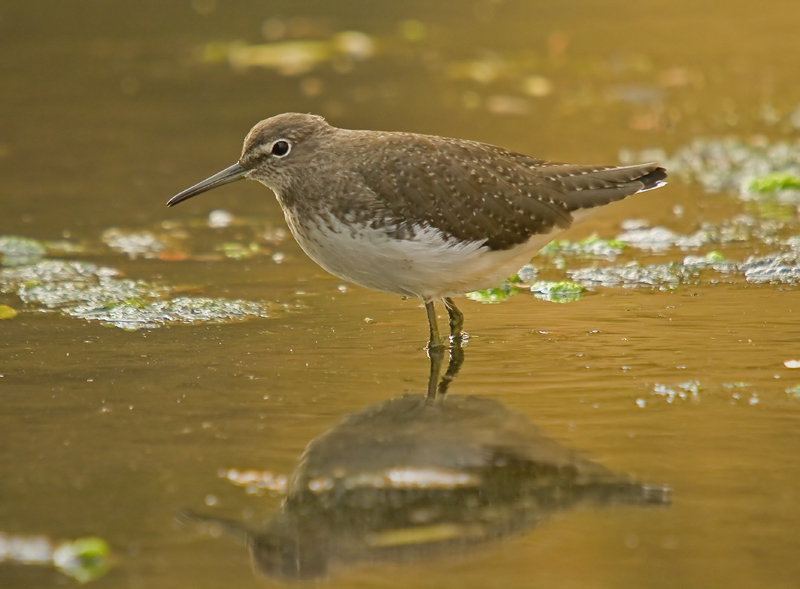
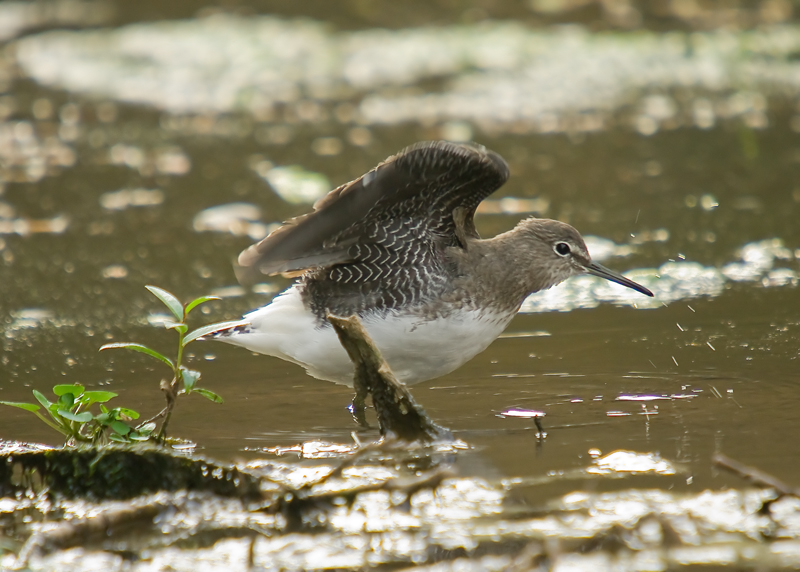
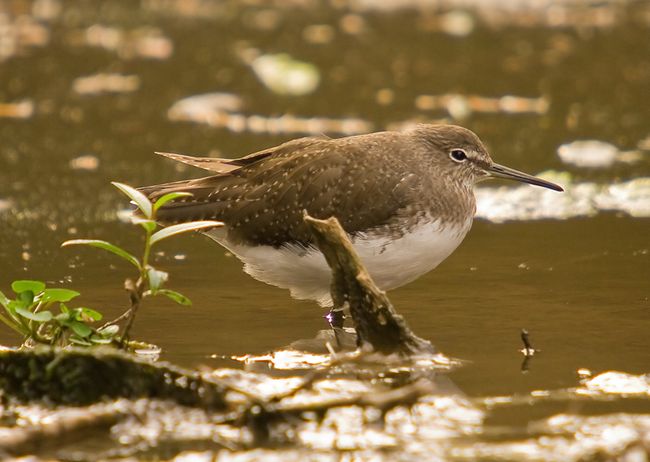
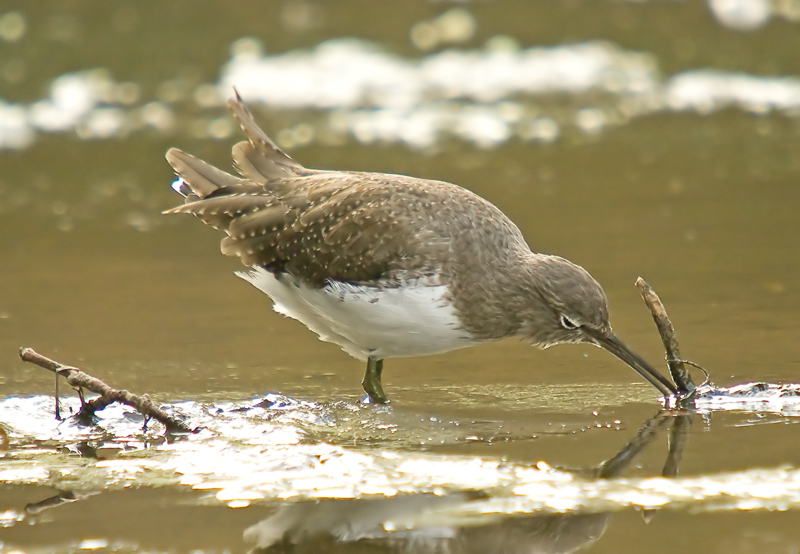
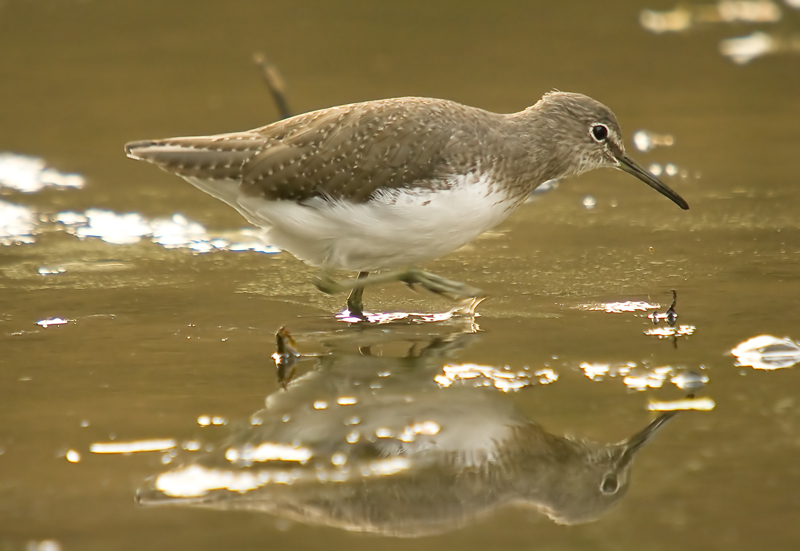
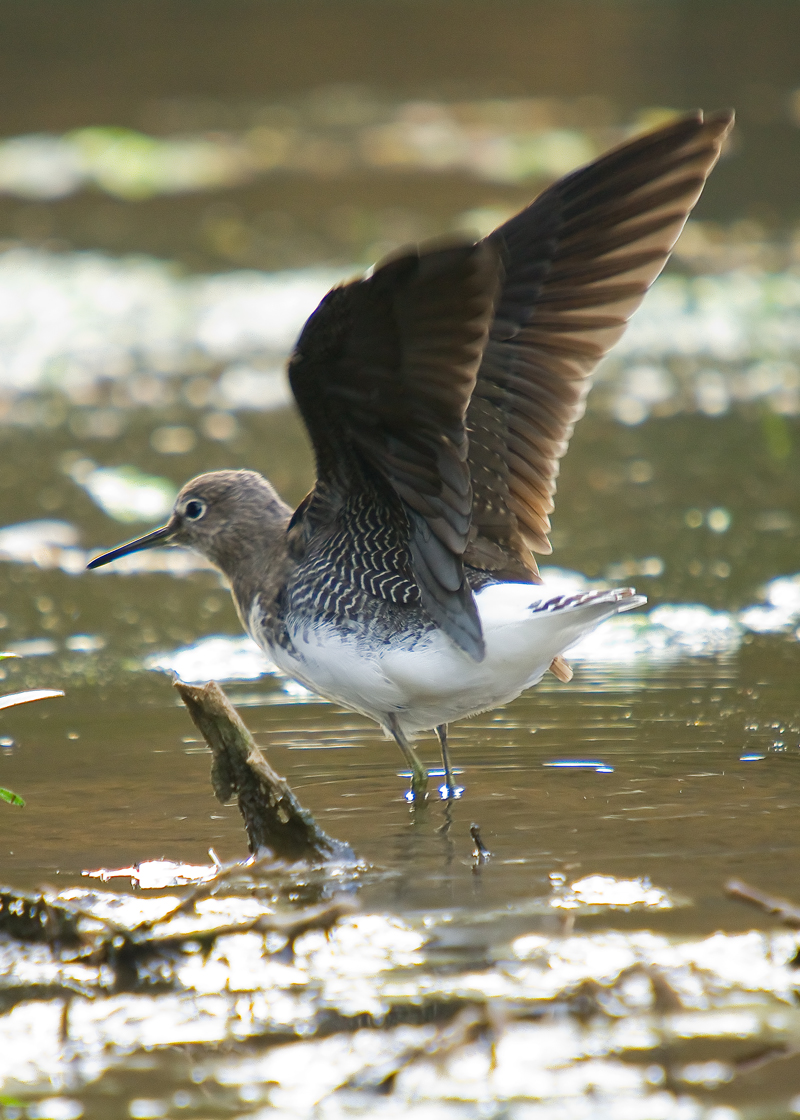
Today’s encounter with the Green Sandpiper has been really special. I am sure that it was made easier to get closer to this bird due to the quietness of the trading estate. If only the light had been slightly brighter, but hey, you can’t have it all. I actually got so close to this bird by just moving the hide forward a few inches at a time. Eventually I got as close as 10 feet and the bird had no idea whatsoever that I was there and carried on acting naturally. He really has got himself a nice territory here. It may look a bit un-natural, it is basically a flood relief ditch, but it is safe, there is lots of food in the form of insect life and at the first sign of danger he can take to the air and fly to safety which he does as soon as any passers by look over from the pavement above. It was fascinating to see him feeding by trembling his legs at a rapid speed beneath the water to disturb insect life.. I am extremely pleased with these photos, the best I have taken of Green Sandpiper. They are a super bird, a bit rare but quite regularly seen around here from July onwards.
The Green Sandpiper does not build its own nest. The female lays her eggs in the abandoned nests of other birds, mostly thrushes ( Song Thrush Turdus philomelos, Blackbird T. merula, Mistle Thrush T. viscivorus) and crows (Jay Garrulus glandarius, Carrion Crow Corvus corone) . Usually during the second day after hatching the chicks jump to the ground from the nest The parents lead them through the forest to a feeding territory, which is usually on the bank of a small forest brook or on the shores of a shallow pond covered with thick vegetation, most often reed-mace Typha sp. . The chicks respond to the warning calls of the parents by taking cover . After several days, the female leaves the family and the young remain in the care of the male until they become independent. Young birds are able to fly for short distances at the age of 18 to 20 days. Immediately after breeding, the adult Green Sandpipers moult their flight and tail feathers on their renesting sites (settling ponds of sugar factories and similar locations).


 Wildlife in a Suburban Garden
Leave a comment