
Having made the effort to get up before 6 I am glad to say that today's ringing session was a special one. We met before 6.30 and travelled to a new site (to me) in East Devon .
Birds were few and far between in the nets due to slightly windy conditions and only 5 in total were caught. but two were very special. 2 Wren, 1 Dunnock, a lovely Marsh Tit and a Garden Warbler which was very interesting to say the least. Garden Warbler are very closely related to Blackcaps and I was very interested to get the chance to examine one in the hand. As Warblers go this is a big species not a lot smaller than a Dunnock for example and significantly larger and more bulky than a Willow Warbler. They are said to be "featureless" when seen in the field, with no wing bar or eye stripe nor white in the tail, in fact it is said that this lack of diagnostic features is in it's self a feature. First impressions led me to be surprised by the size and then a white belly as well as a faint eye ring.

Our bird turned out to be a juvenile just starting a moult with pin feathers on the wing coverts. I noticed on the photographs that it also had a soft gape. You can see that this bird is brownish and not as grey as I have imagined when I have caught glimpses in the field. It is slightly unfortunate that the bird's plumage looks a bit ruffled by the handling which confuses the photograph a little.
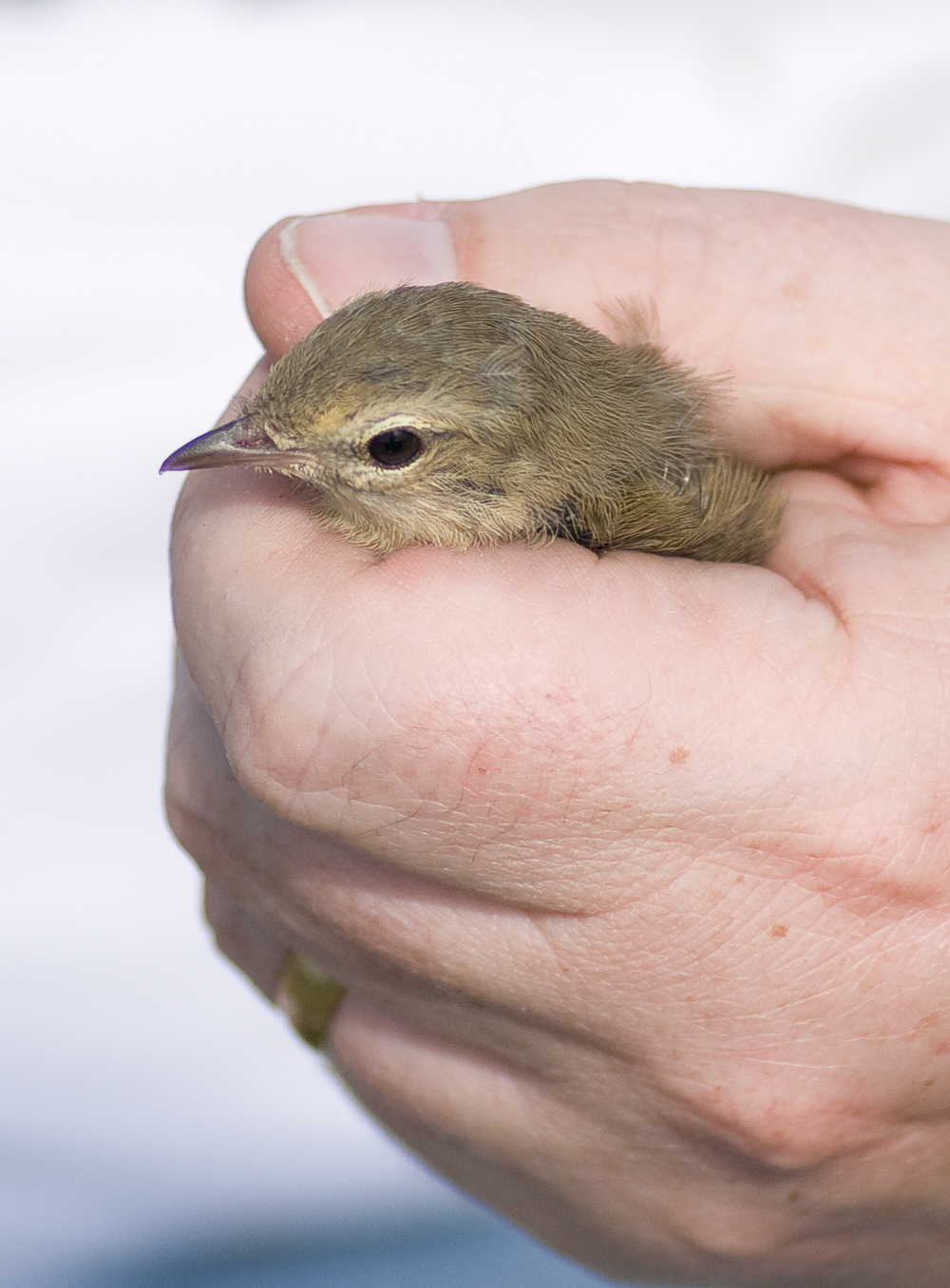
As far as ageing is concerned we first of all checked for any sign of a brood patch and then when there was no sign of that we looked for pin feathers that would indicate a post juvenile moult. Young birds at the age of 6 or 7 weeks for example undergo this moult of feathers to an intermediate plumage and retain these feathers until after breeding in the first year. The presence of these emerging "pin feathers" in our bird proved it's age as a bird bred this season. This was a nice find for the site proving that Garden Warbler breed here in East Devon.
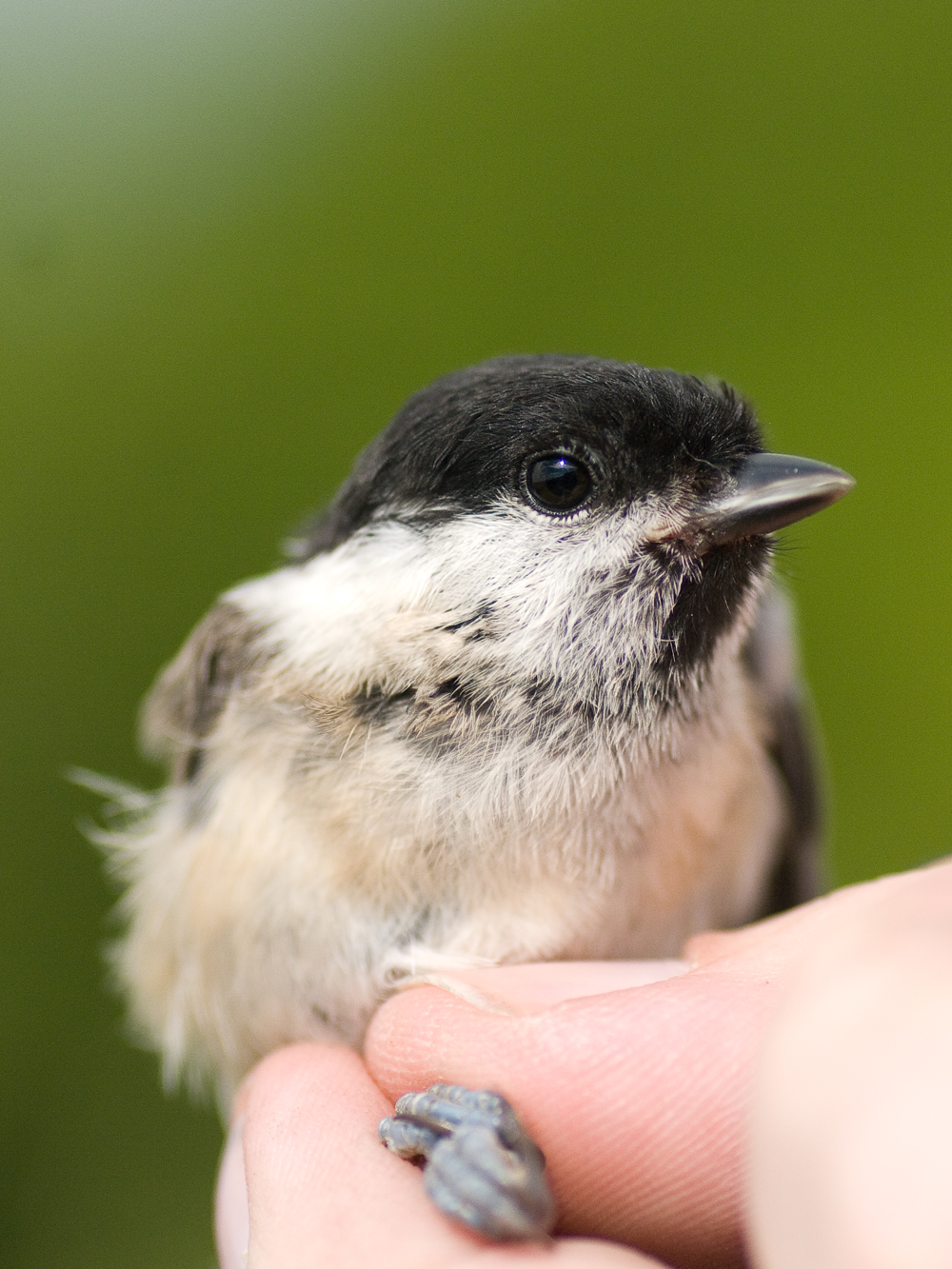
Under the supervision of Dr. Ian I removed this little Tit from the mist net with ease, and back at the central point proceeded with the job of ageing, sexing (if possible) and
ringing. We thought at one point that we were dealing with a Willow Tit such is the difficulty of separating these two very similar species. They were not recognised as individul species until the start of the 20th century.
There was a hint of disappointment from Ian when he realised that it was a Mrsh and not a Willow because this would have been a tremendous coup and a wonderful discovery as Willow Tit are very rare in Devon.
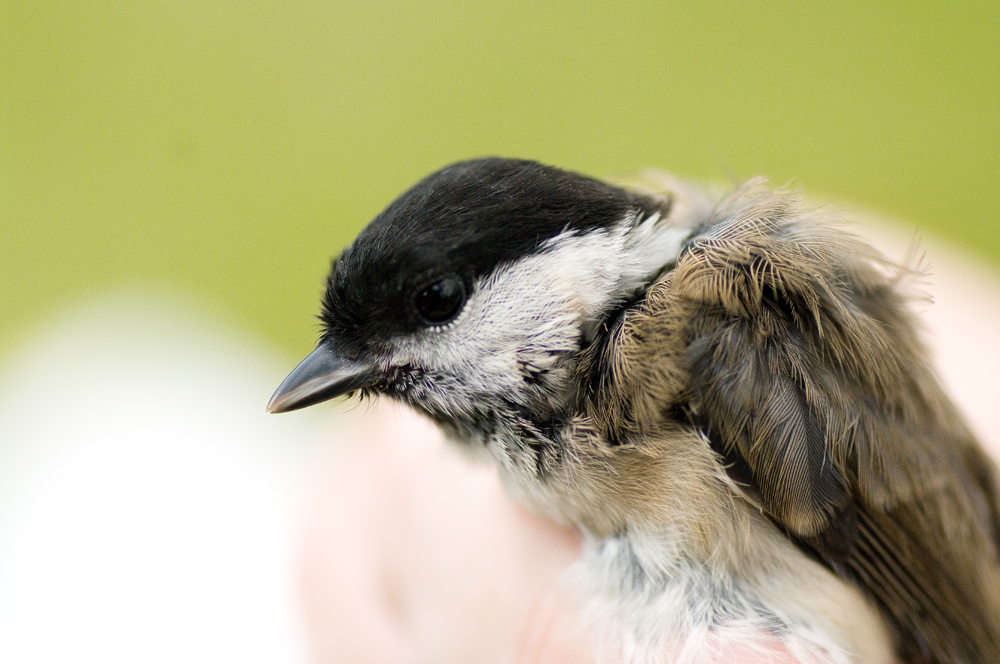
Regardless of the small amount of birds the quality made up for it and I was very impressed to be able to see both these two species so closely. The two Wrens were almost forgotten even though they are such gorgeous little birds and in the hand equally as interesting as they are in the field. One was a juvenile and the other an adult. I am not surprised that we caught a couple because they were singing constantly with lots of individual territories identified….. too many to count really. If you are interested in identifying Marsh Tit in the hand here is a nice close-up of the underside of the tail which is crucial apparently.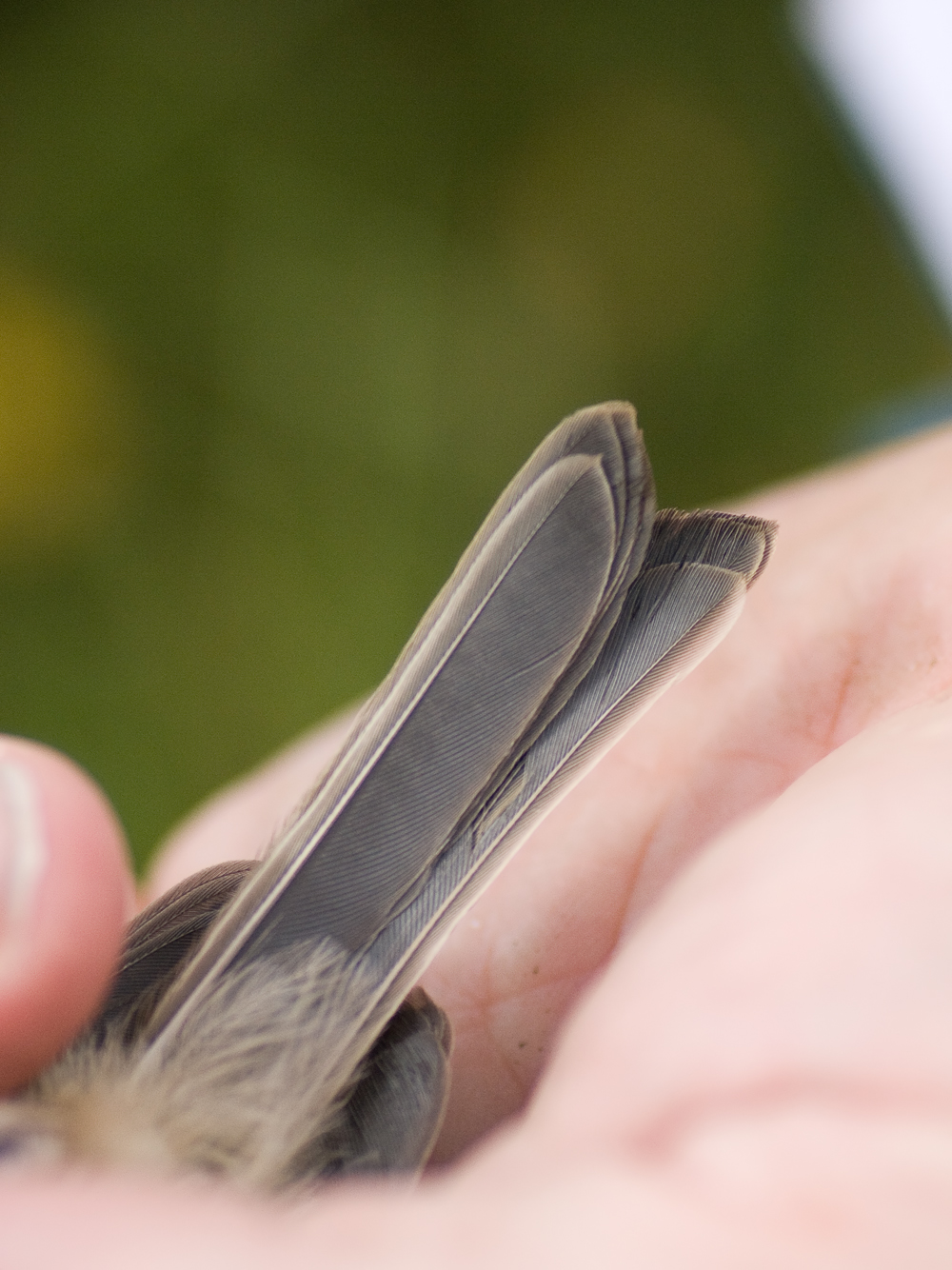
 Wildlife in a Suburban Garden
Leave a comment