
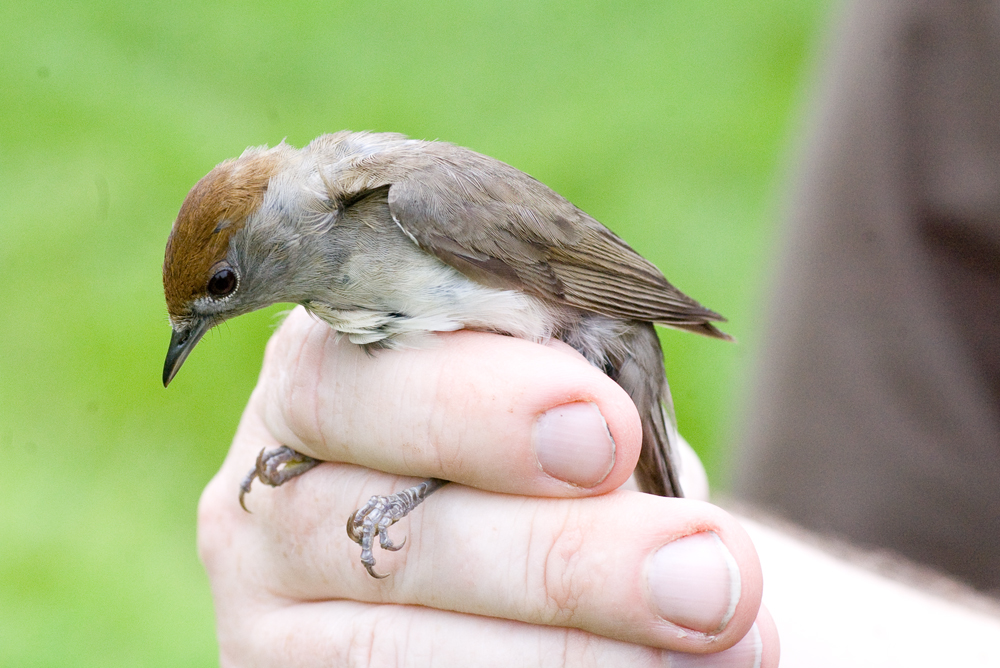
Today has been a great one! At some godly hour, well around 6.30 I left the house to attend a ringing training session. I am trying to obtain the necessary permit to enable me to ring the garden birds in order to keep more accurate records concerning movement and populations. This will enhance, not only my own study and knowledge but will give me the opportunity to share information with the rest of the “birdwatching” world. The British Trust for Ornithology overseas the ringing of all British birds and rings are issued by them and all birds ringed are logged and the details sent to the BTO for collation. In this way populations and movements can be monitored and scientific data stored to aid conservation.
Enough of that though for the time being. If you are interested in birds as I am this is such a great way to get up and close to lots of different and interesting species. The birds are aged, sexed, weighed, measured and assigned a ring number before release. The first bird caught this morning was a female Blackcap Warbler. As you can see I had the opportunity to photograph them before release. later on we caught a male Blackcap, below.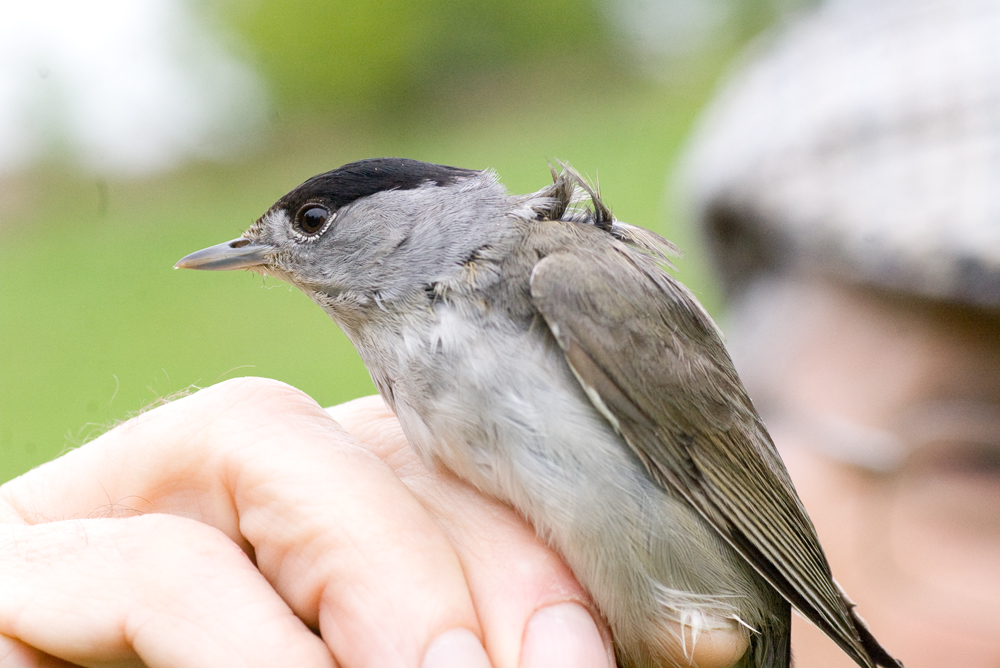
All birds are released as quickly as possible, this is particularly important at this time of the year when they are likely to be breeding. We had heard Blackcaps singing while setting the nets up so I was not at all surprised when we caught them.
Bullfinches are my favourite birds and it was lovely to see a pair caught and ringed 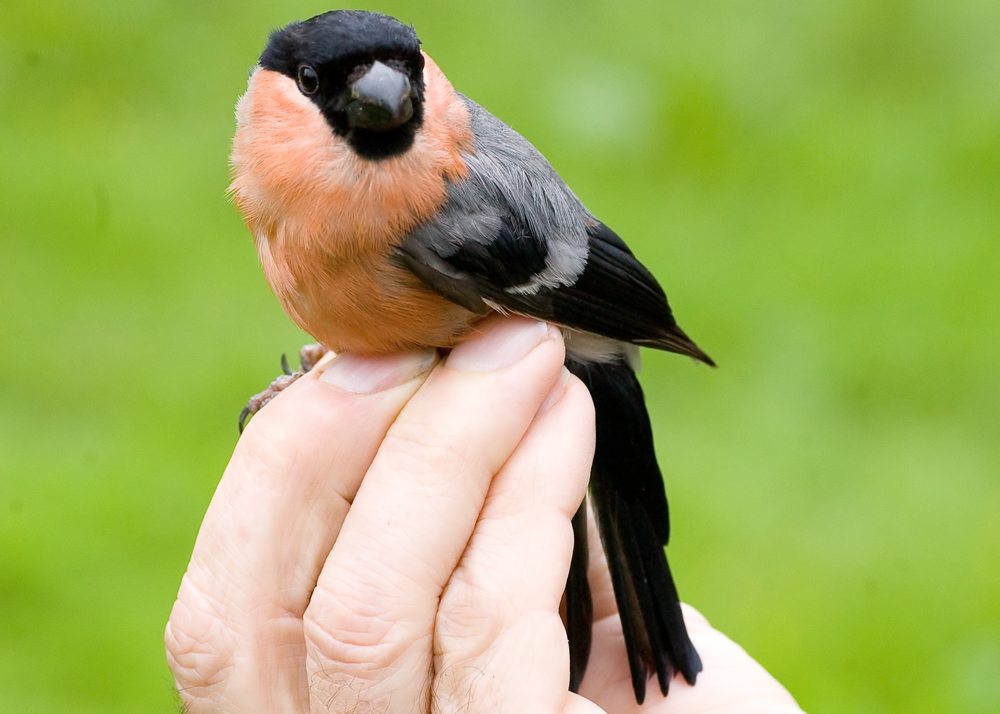
I am not sure if they could be described as the highlight of the session because they were eclipsed by first a female and then a male Jay. Both were very feisty and took great exception to the indignity of capture taking the opportunity to peck very hard at the hands of the ringers, and who can blame them?

I couldnt believe how aggressive they were and they raised their head feathers in to a crest to try and look threatening. They are a beautiful proud bird with lovely plumage, the male being much more richly coloured a fact that would not be obvious in the field though.
I am pretty certain that this one shows the female and the one below is the male so not a great deal of noticeable difference.
As the male was having his ring put on by someone else I took the opportunity to take this photo of the eye which was so attractive and interesting especially as you can see me reflected in it!
On these ringing sessions the discussion almost always arises about the difference betweenChiffchaffs and Willow Warbel., two very similar species. Birders will tell you that they can always tell them apart in the field but my mentor who has been ringing for 30 years or so and handled literally hundreds will tell you/and me that this is rubish and the only real and true way, apart from the call is by subtle wing measurement and shapes. As I hav not got examples of both species here I will not go in to this but here is a Chiffchaff photographed this morning that was thought. at first to be a Willow Warbler until the wings were measured.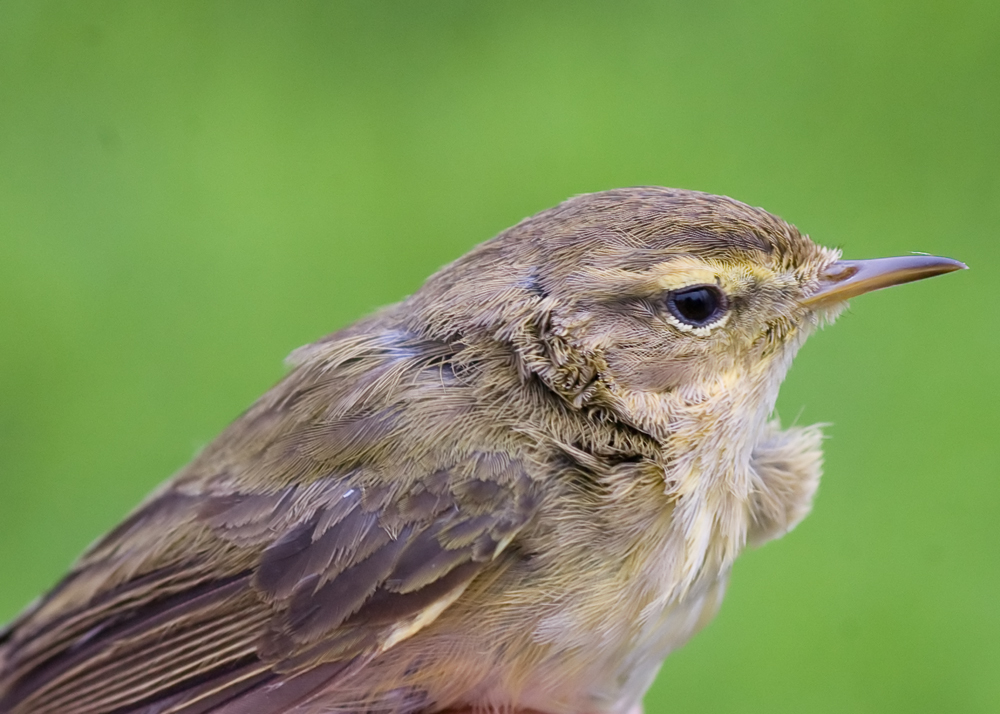
All in all a great morning and real chance to get some great photos particularly of the Jays. It is a most interesting and rewarding experience. To be handling birds and be instructed about the ways and means to determine age and sex is taking my own bird study to a new level. We also caught a nice Wren which turned out to be a female, they are Sexually monomorphic, that is to say that males and females are indistinguishable by plumage pattern and colour. The one that we caught had a very, very noticeable brood patch which is a very important feature to record. Male Wrens are known to not have a brood patch so this is a certain way of identifying females at this time of the year. The Wren weighed 9.1 grams by the way!
About the Podcast
Welcome to The Houseplant Podcast, your ultimate guide to houseplants! Join us as we explore the wonders and importance of plants in our lives.
 Wildlife in a Suburban Garden
Leave a comment