
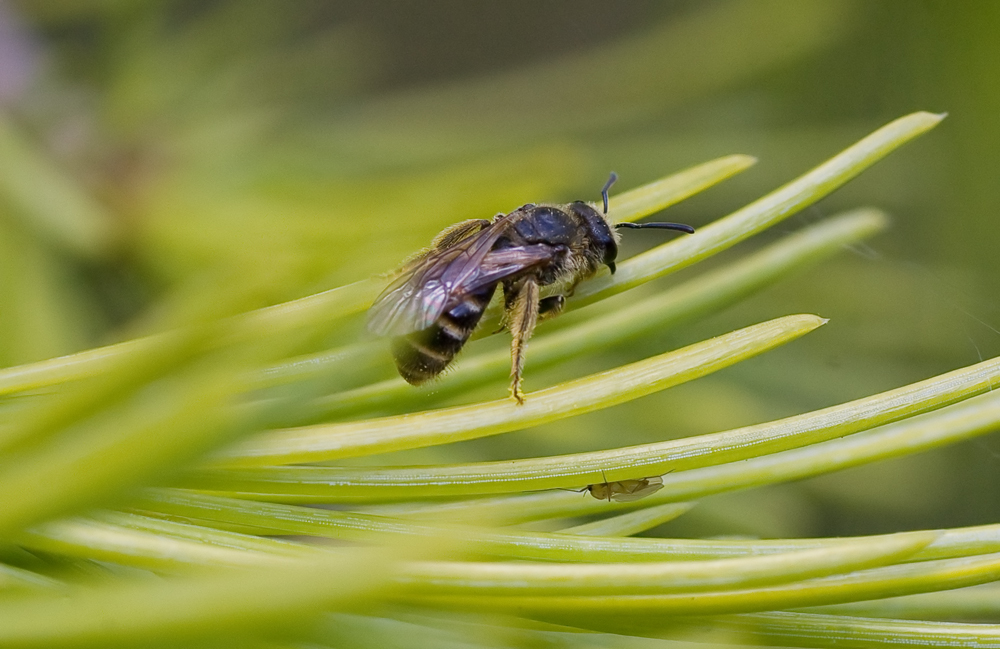
I discovered this lovely solitary bee in the garden today. He didn’t look particularly unhappy, nor lonely and I can’t imagine why he is on his own, but seriously Solitary Bees are a good addition to any garden and make up 90% of the 250 species of the Uk’s bee species. A bit more about them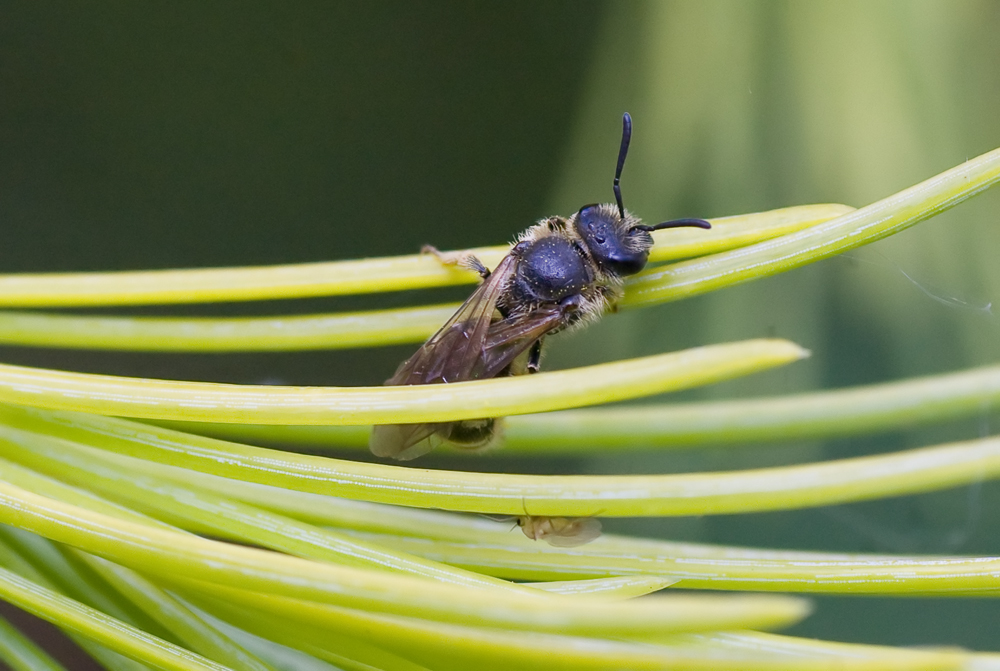 .
.
There are more than 200 species of solitary bee in Britain. They are so named because, unlike honeybees and bumblebees, they do not live in colonies. The first solitary bees to appear in the garden, as early as March each year, are the miner bees (Andrena). Similar to honeybees in appearance, they lack pollen baskets on their hind tibiae. These hairy bees make nests in the ground, usually in sandy soil and along paths. The female will dig the nest, stock it with nectar and pollen and then seal it, leaving the young to fend for themselves. Also to be seen later on in the season are the leaf-cutter bees such as the Megachile species, which cut neat circles out of rose leaves and petals to build nests in dead plant stems or sometimes in stacks of old flowerpots. These bees resemble honeybees but can be distinguished by the bright orange pollen brushes under their abdomens. All solitary bees are excellent pollinators and should be encouraged into your garden.
About the Podcast
Welcome to The Houseplant Podcast, your ultimate guide to houseplants! Join us as we explore the wonders and importance of plants in our lives.
 Wildlife in a Suburban Garden
Leave a comment