
England is thought of as a wet rainy country. The last few days have been moderately dry but the air is damp and it has been one of the frostiest starts to winter in our area of the UK for 40 years. Today however, we have got double figure temperatures and we have been lucky to have a tiny bit of sunshine here and there. As far as wildlife and birds are concerned Goldfinches and Siskins are my main area of focus these last few days. Yesterday’s Siskin (see below) was a delightful addition to this years garden list and now the Goldfinches have fully discovered the Niger feeder they are in and out of the garden constantly. This garden, the focus of all my attention is in fact a tiny patch of green oasis in the middle of suburbia on the edge of the City of Exeter. As the “bird flies” we are relatively close to fields and English countryside but we are by no means on the edge of open spaces. However, we have a large apple try at the end of the garden about 60 feet from the house and a mature hedge to the left which contains a large cotoneaster bush, a mature Clematis has been allowed to ramble through and this small area provides not only food in the form of cotoneaster berries but cover for bird species as they move around the garden.
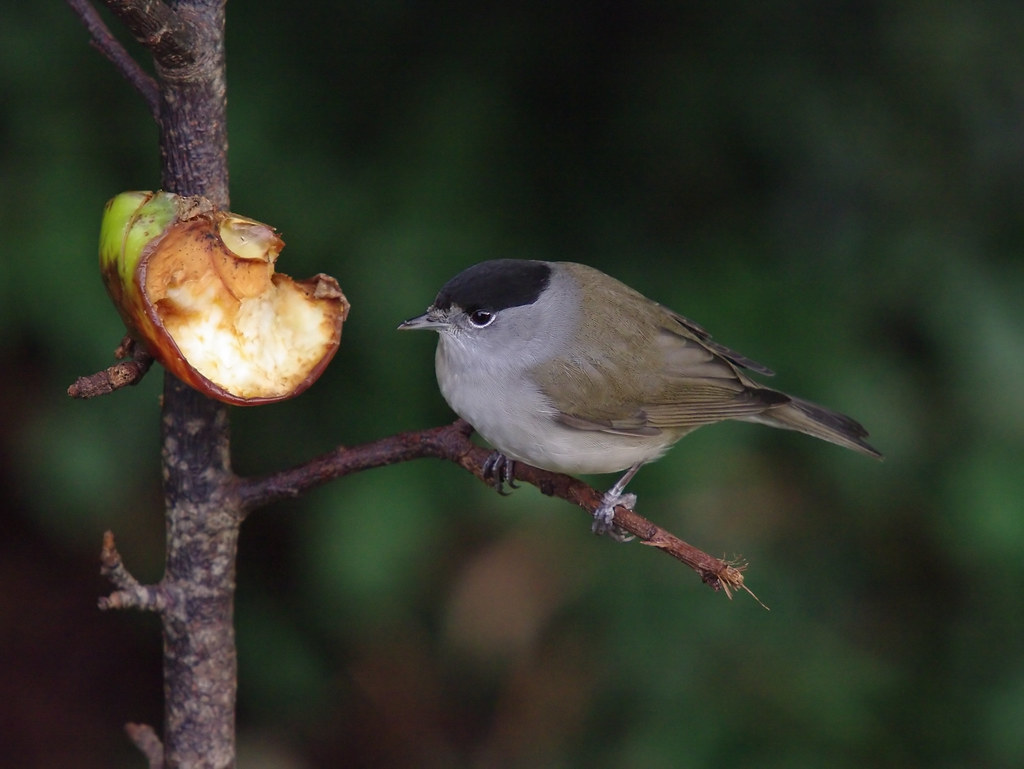
Focusing on the Goldfinches this morning I decided after a while in the lower hide to come back up to the house and have a look on the computer at the images already taken. In front of me only feet from the house was the male Blackcap feeding on the apple piece which I have strategically placed on a branch more out in the open than before in the hope that the he might leave the security of the bush and show himself in the open more and perhaps give me a better photo opportunity. I snapped off a few more Blackcap photos but in the less than ideal light this was the best one. Strangely no sign of a female for more than a week now.
Focusing on the Goldfinches this morning I decided after a while in the lower hide to come back up to the house and have a look on the computer at the images already taken. In front of me only feet from the house was the male Blackcap feeding on the apple piece which I have strategically placed on a branch more out in the open than before in the hope that the he might leave the security of the bush and show himself in the open more and perhaps give me a better photo opportunity. I snapped off a few more Blackcap photos but in the less than ideal light this was the best one. Strangely no sign of a female for more than a week now.
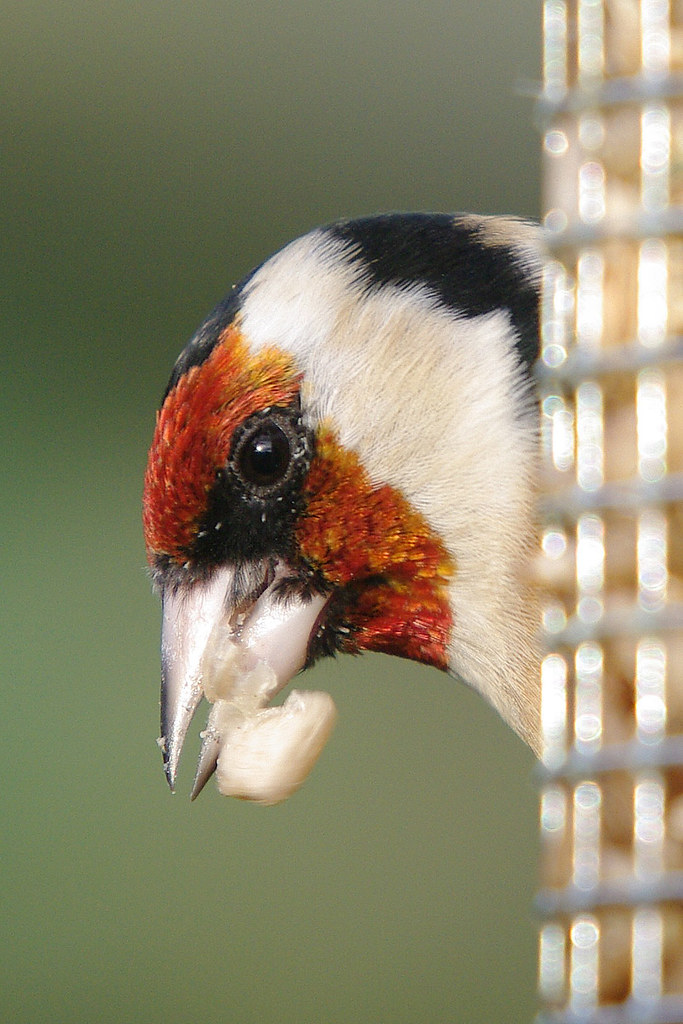
This Goldfinch is undoubtedly a young bird in it’s first winter. Notice how there is just the faintest hint of grey amongst the red on the head. In a juvenile bird this is grey and then as maturity progresses the head turns the distinctive red colour.
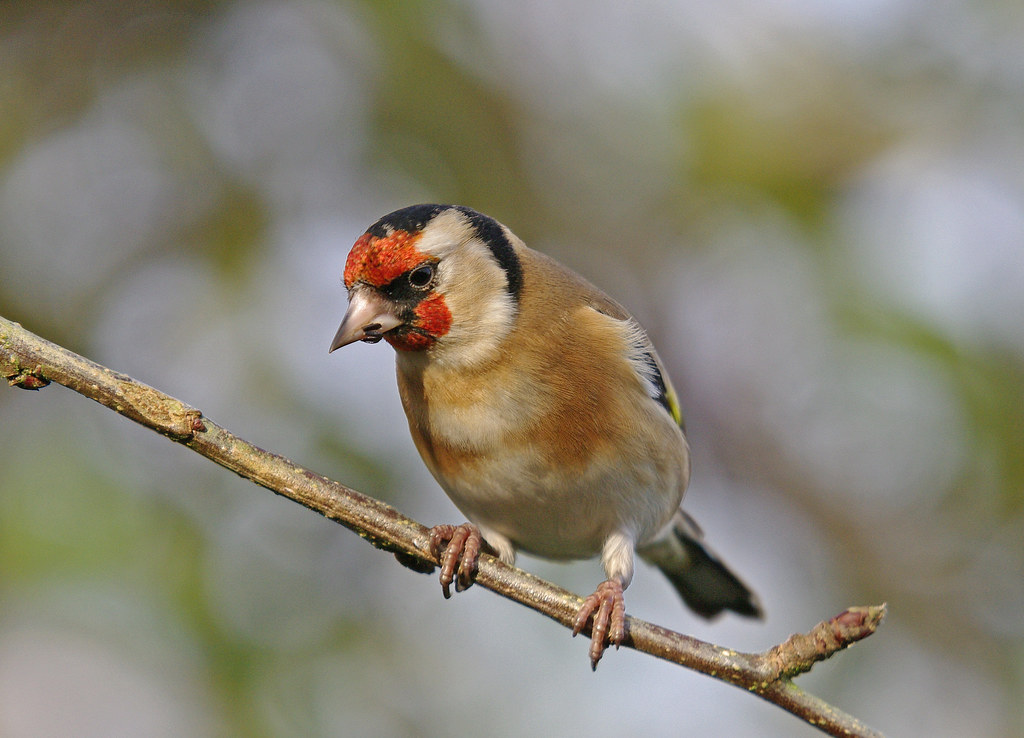


 Wildlife in a Suburban Garden
Leave a comment