
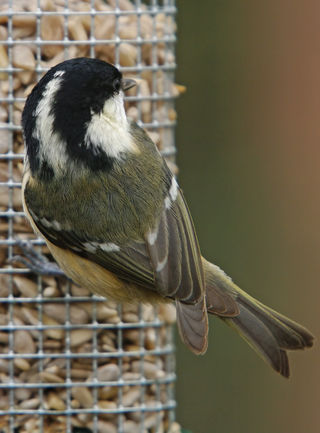
Over the last few days I have constructed a stand up hide positioned only 3 feet from one of the feeders, this is to get my camera closer to the "action" In bird photography it is usually important to get as close to your subject as possible. This "closeness" does present some technical problems however and it isn't a case of just pointing the camera in the right direction and then hoping for the best. Coal tits for example are very quick and dive on to a feeder, grab a morsel and then leave as soon as they can. With a situation like that you need to choose the very highest shutter speed necessary. In dull light this can be hard to achieve. In conditions such as this you would need to choose a high ISO setting which in it's self is not perfect as there will be noticeable "grain" on the photo which is referred to as "noise" and can seriously detract from the quality of any photograph.
You may have chosen the fastest shutter speed possible to "freeze" the action and believe me little birds are constantly on the move, but another problem that you need to contend with is "depth of field". That is to say that a subject will be in focus at a given point, but the further away from this given point you are the more out of focus it will be. You can see from the photo above that the bird's back is very sharp but the feeder is starting to be a little blurry. In close up photography this is greatly exaggerated, we are talking millimetres.
Another consideration is direction of light. Ideally you need the strong light to be flooding on to the subject from behind you and in the direction that you are looking. With wild creatures this is often difficult to achieve but you can do this by predicting where your subject is going to appear and positioning yourself accordingly. With a garden feeder this is not such a problem but it is something which is vital as it can ruin any chance of a successful image.
After all these considerations and choices have been met, you then need something to photograph and with birds you need to have a good knowledge of your subject in order to know where you are likely to find a good model. Not always easy but at this time of the year, with common bird your garden is as good a place as anywhere.
With digital photography we have the advantage of being able to select the very best of our photos from those taken. I find that only around 5% of all shots taken are worthy of being kept. But it is good fun trying!
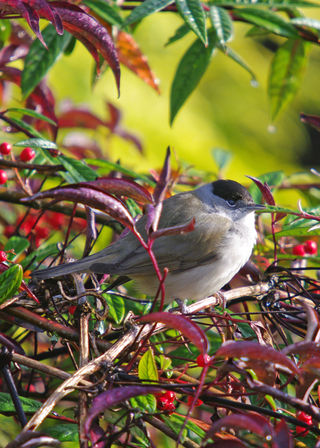
I am lucky in my garden that as well as the apple tree at the end of my garden which acts as safe refuge for lots of birds as they pass through and by the garden, I also have a really well established cotoneaster bush only a few feet from my upstairs bathroom window which is a perfect place for all the birds that visit the garden to shelter and find food. This gives me the chance, from the comfort of a warm room to take pictures at birds-eye level and only a few feet from them. Today for example this male Blackcap posed really well for me for a few seconds and I managed to get this shot of him.
 Wildlife in a Suburban Garden
Leave a comment