
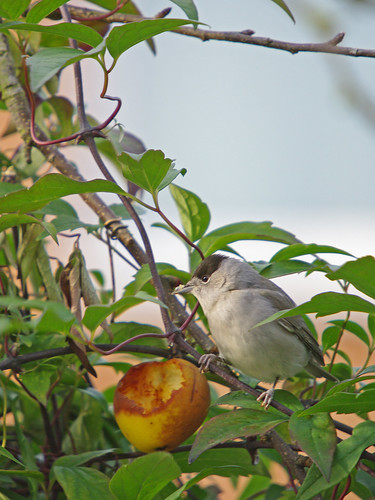
I have learnt so much about Blackcap warblers this last 48 hours. Their presence here in the UK, in the winter has always fascinated me and when ever I am lucky enough to see them in my garden it is always a particular treat. Friday was the first sighting this winter and I was seeing them up until about March before they left. It turns out there is lots going on with this species that is simply fascinating. The winter population here in the South West is made up of German and Scandinavian birds who instead of migrating to Spain and North Africa, like some of their fellows, and the UK summer birds, choose to migrate a more northerly course. This first came to light in 1961 when a bird wearing a ring was caught by a cat and the ring traced to a breeding study in Austria. This led to further, more detailed investigation which proved that a proportion of the Austrian/German Blackcaps were choosing to winter in Southern Ireland and the South West of Britain. Further studies have shown that the English wintering birds are genetically programmed to migrate here.
Migrating this shorter distance is of real benefit to UK wintering Blackcaps because they arrive back on their breeding grounds some 7 to 10 days earlier than their more adventurous “southern wintering” counterparts thereby gaining two advantages. Firstly they have the pick of the best nesting sights and habitat. Research has shown that this leads to better and more successful breeding and secondly females arrive back having expended less energy and fat resources. This leads to a larger more successful clutch of eggs and a higher success rate. The outcome is that the UK wintering population is growing and out-doing the Southern migrating birds.
Today I caught sight of both male and female Blackcaps quite early on and took some pictures from the bathroom before hurrying down to the shed to wait it out to try and get a good shot of a male. It didn’t take more than 20 minutes or so. The photo above is this morning’s, the bird, camera and apple are all in exactly the same place as yesterday, the only difference being 24 hours! Have alook at photos of the female here
 Wildlife in a Suburban Garden
Leave a comment